My Quest to Conquer Seoul's Public Transport: A Humorous Guide to Not Becoming a Human Pinball
Let's be honest, the moment you step off that plane in Korea, there's an almost immediate sense of impending navigational doom. Or maybe that's just me. I've traveled enough to know that map apps are my personal digital deities, but even the omniscient Google Maps (or its local, more powerful cousins, KakaoMap and Naver Map) can't quite prepare you for the sheer, exhilarating, and often slightly bewildering experience of traversing a Korean city. It's like being dropped into a high-stakes, meticulously choreographed urban ballet, and you, my friend, are the bewildered, slightly sweaty principal dancer, constantly on the verge of tripping over your own feet while everyone else glides with effortless grace. I came to Korea dreaming of ancient palaces and sizzling bibimbap; I stayed to write an ode to the T-Money card, my true travel MVP.
The Iron Octopus Beneath Our Feet (and Why It Never Sleeps)
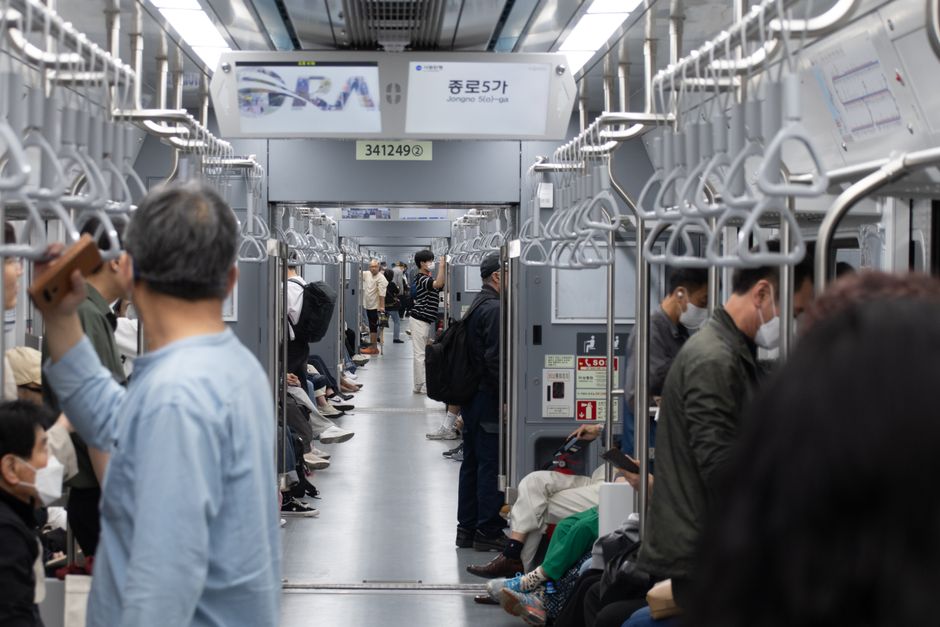
First up, the undisputed king, emperor, and benevolent dictator of Korean urban travel: the subway. Specifically, the Seoul subway. This isn't just a transport system; it's a subterranean ecosystem, a sprawling, multi-limbed iron octopus that swallows up millions daily and spits them out precisely where they need to be. My first encounter felt less like boarding a train and more like signing up for an advanced degree in "Subwayology." There are more lines than I have fingers and toes (and probably brain cells on a Monday morning), each color-coded like a particularly intense rainbow. Blue, green, orange, purple, brown, gold, some kind of magenta... it's a spectrum that would make a Crayola executive weep with joy.
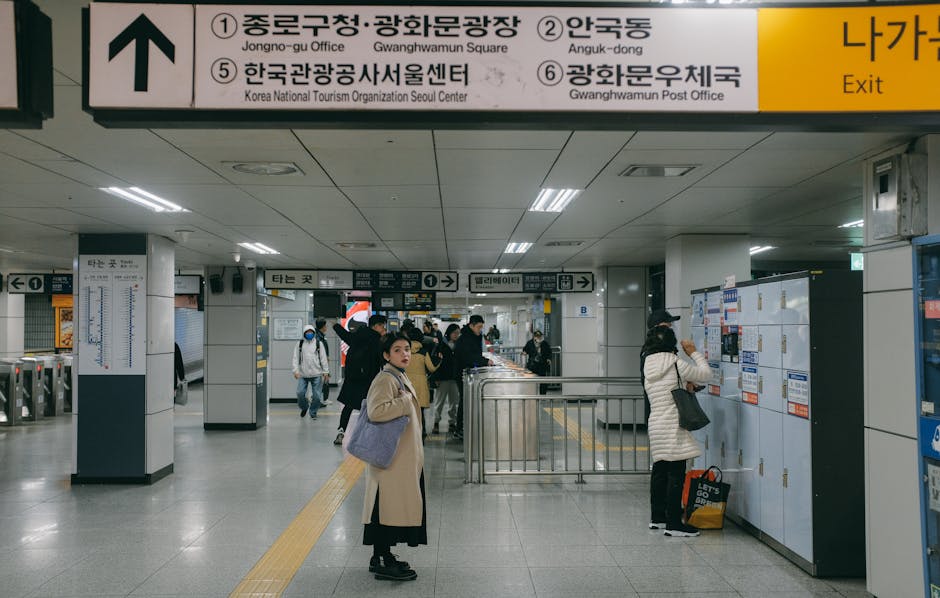
But here's the kicker: it's *gloriously efficient*. You see, back in my home country, if a train is five minutes late, we start composing angry haikus. In Seoul, if a train is 30 seconds off schedule, someone probably loses their pension. The trains arrive with astonishing regularity, are impeccably clean (you could practically eat off the floor, though I wouldn't recommend it during rush hour), and, thanks to the omnipresent digital screens and often excellent English signage, surprisingly user-friendly once you get the hang of it. My biggest challenge? Mastering the art of the transfer. Navigating the underground labyrinth between Line 2 and Line 5 can sometimes feel like a mini-marathon, complete with confusing arrows and the distinct possibility of emerging into a shopping arcade instead of your intended platform. More than once, I've found myself staring blankly at a map, convinced I'd accidentally stumbled into Narnia via the Gangnam station. But even in my moments of panic, there's always an underlying sense of awe at this engineering marvel, a testament to Korea's rapid development from post-war rebuilding to a modern powerhouse, much of which was fueled by the vision of linking its growing cities and communities. This wasn't just about moving people; it was about connecting a nation, piece by meticulously planned piece.
Buses, Brains, and the Art of the Sudden Stop
Ah, the buses. If the subway is a sophisticated, highly organized ballet, then the bus system is a wild, adrenaline-fueled street performance, often set to the soundtrack of a sudden, unexpected brake-screech. Korean bus travel is less about graceful movement and more about embracing the thrill of being a human pinball. You might start your journey sitting serenely, admiring the cityscape, only to find yourself clinging to the nearest pole for dear life as your driver executes a turn that would make a Formula 1 racer nod approvingly.

Identifying your bus can be a sport in itself. The numbers aren't always intuitively logical (why is "400" going to the same place as "400-1" but not "401"? The mysteries abound!), and while navigation apps like KakaoMap are indispensable, they can't save you from the cultural expectation of being ready to hop on the moment your bus appears, lest you incur the silent, disapproving judgment of an entire queue of ajummas. My personal strategy involves a combination of intense staring at approaching vehicles, frantic cross-referencing with my phone, and an occasional desperate wave that probably makes me look like I'm auditioning for a role in a low-budget action movie. Once you're on, and you've managed to tap your T-Money card (don't forget to tap *out* too, or the system gets confused, and you might get charged extra - a lesson learned the hard way, naturally), it's a fantastic way to see the city. You get a street-level view, you pass by local markets, bustling cafes, and residential areas that the subway can't show you. Just remember to hold on tight, especially when approaching your stop. Those brake pedals are not for the faint of heart, or those with weak grip strength.
When All Else Fails: The Taxis, The Feet, and The Art of Surrender
Sometimes, after a long day of pretending I understand Korean directions and deciphering pictograms, my brain simply taps out. That's when I turn to the glorious simplicity of a taxi. Enter Kakao T, the app that has single-handedly saved me from countless moments of travel despair. Gone are the days of frantically waving at passing taxis only to realize they're either occupied, off-duty, or simply haven't registered my existence. With Kakao T, it's a few taps, a moment of anticipation, and then *poof*, a bright orange (or black, or white) chariot appears, ready to whisk you away to your destination.
Of course, this isn't without its own charm. The language barrier can lead to some truly memorable rides. I once tried to explain to a driver that I wanted to go to "that really famous market near the big palace" by gesturing vaguely and repeating the word "market" with increasing desperation. He eventually deduced my meaning, bless his patient soul, and got me there. It's in these moments that you appreciate the universal language of pointing and a good smartphone translation app.
And then there's walking. Oh, the walking! Korean cities, especially Seoul, are built for pedestrians. The sidewalks are wide (mostly), the street food beckons, and there are endless nooks and crannies to explore. My step count explodes every time I visit, and my calves develop the kind of definition typically reserved for professional mountaineers. You might set out with a specific destination in mind, only to get delightfully sidetracked by a hidden alleyway cafe, a vibrant mural, or an impromptu street performance. Before smartphones, people relied on detailed paper maps or the kindness of strangers. While my digital map is always open, I still cherish the experience of simply wandering, letting the city guide me, stumbling upon an unexpected temple or a particularly charming hanok village. It's the ultimate act of surrender, letting go of the rigid itinerary and embracing the serendipity of urban exploration.
So, here's my takeaway from years of attempting to navigate Korea's incredible cities: it's an adventure. It's messy, it's exhilarating, and sometimes it feels like you're playing a real-life game of "Where's Waldo?" but with trains and buses. You'll make mistakes, you'll probably get on the wrong line, you might even miss your stop because you were too busy admiring a particularly stylish ajumma's handbag. But in the end, you'll get there. And along the way, you'll experience a vital, bustling, and endlessly fascinating aspect of Korean life that makes the journey as much a part of the destination as the destination itself. Now, if you'll excuse me, my T-Money card just whispered sweet nothings about an unexplored bus route. Wish me luck!
The Iron Octopus Beneath Our Feet (and Why It Never Sleeps)
First up, the undisputed king, emperor, and benevolent dictator of Korean urban travel: the subway. Specifically, the Seoul subway. This isn't just a transport system; it's a subterranean ecosystem, a sprawling, multi-limbed iron octopus that swallows up millions daily and spits them out precisely where they need to be. My first encounter felt less like boarding a train and more like signing up for an advanced degree in "Subwayology." There are more lines than I have fingers and toes (and probably brain cells on a Monday morning), each color-coded like a particularly intense rainbow. Blue, green, orange, purple, brown, gold, some kind of magenta... it's a spectrum that would make a Crayola executive weep with joy.
But here's the kicker: it's *gloriously efficient*. You see, back in my home country, if a train is five minutes late, we start composing angry haikus. In Seoul, if a train is 30 seconds off schedule, someone probably loses their pension. The trains arrive with astonishing regularity, are impeccably clean (you could practically eat off the floor, though I wouldn't recommend it during rush hour), and, thanks to the omnipresent digital screens and often excellent English signage, surprisingly user-friendly once you get the hang of it. My biggest challenge? Mastering the art of the transfer. Navigating the underground labyrinth between Line 2 and Line 5 can sometimes feel like a mini-marathon, complete with confusing arrows and the distinct possibility of emerging into a shopping arcade instead of your intended platform. More than once, I've found myself staring blankly at a map, convinced I'd accidentally stumbled into Narnia via the Gangnam station. But even in my moments of panic, there's always an underlying sense of awe at this engineering marvel, a testament to Korea's rapid development from post-war rebuilding to a modern powerhouse, much of which was fueled by the vision of linking its growing cities and communities. This wasn't just about moving people; it was about connecting a nation, piece by meticulously planned piece.
Buses, Brains, and the Art of the Sudden Stop
Ah, the buses. If the subway is a sophisticated, highly organized ballet, then the bus system is a wild, adrenaline-fueled street performance, often set to the soundtrack of a sudden, unexpected brake-screech. Korean bus travel is less about graceful movement and more about embracing the thrill of being a human pinball. You might start your journey sitting serenely, admiring the cityscape, only to find yourself clinging to the nearest pole for dear life as your driver executes a turn that would make a Formula 1 racer nod approvingly.
Identifying your bus can be a sport in itself. The numbers aren't always intuitively logical (why is "400" going to the same place as "400-1" but not "401"? The mysteries abound!), and while navigation apps like KakaoMap are indispensable, they can't save you from the cultural expectation of being ready to hop on the moment your bus appears, lest you incur the silent, disapproving judgment of an entire queue of ajummas. My personal strategy involves a combination of intense staring at approaching vehicles, frantic cross-referencing with my phone, and an occasional desperate wave that probably makes me look like I'm auditioning for a role in a low-budget action movie. Once you're on, and you've managed to tap your T-Money card (don't forget to tap *out* too, or the system gets confused, and you might get charged extra - a lesson learned the hard way, naturally), it's a fantastic way to see the city. You get a street-level view, you pass by local markets, bustling cafes, and residential areas that the subway can't show you. Just remember to hold on tight, especially when approaching your stop. Those brake pedals are not for the faint of heart, or those with weak grip strength.
When All Else Fails: The Taxis, The Feet, and The Art of Surrender
Sometimes, after a long day of pretending I understand Korean directions and deciphering pictograms, my brain simply taps out. That's when I turn to the glorious simplicity of a taxi. Enter Kakao T, the app that has single-handedly saved me from countless moments of travel despair. Gone are the days of frantically waving at passing taxis only to realize they're either occupied, off-duty, or simply haven't registered my existence. With Kakao T, it's a few taps, a moment of anticipation, and then *poof*, a bright orange (or black, or white) chariot appears, ready to whisk you away to your destination.
Of course, this isn't without its own charm. The language barrier can lead to some truly memorable rides. I once tried to explain to a driver that I wanted to go to "that really famous market near the big palace" by gesturing vaguely and repeating the word "market" with increasing desperation. He eventually deduced my meaning, bless his patient soul, and got me there. It's in these moments that you appreciate the universal language of pointing and a good smartphone translation app.
And then there's walking. Oh, the walking! Korean cities, especially Seoul, are built for pedestrians. The sidewalks are wide (mostly), the street food beckons, and there are endless nooks and crannies to explore. My step count explodes every time I visit, and my calves develop the kind of definition typically reserved for professional mountaineers. You might set out with a specific destination in mind, only to get delightfully sidetracked by a hidden alleyway cafe, a vibrant mural, or an impromptu street performance. Before smartphones, people relied on detailed paper maps or the kindness of strangers. While my digital map is always open, I still cherish the experience of simply wandering, letting the city guide me, stumbling upon an unexpected temple or a particularly charming hanok village. It's the ultimate act of surrender, letting go of the rigid itinerary and embracing the serendipity of urban exploration.
So, here's my takeaway from years of attempting to navigate Korea's incredible cities: it's an adventure. It's messy, it's exhilarating, and sometimes it feels like you're playing a real-life game of "Where's Waldo?" but with trains and buses. You'll make mistakes, you'll probably get on the wrong line, you might even miss your stop because you were too busy admiring a particularly stylish ajumma's handbag. But in the end, you'll get there. And along the way, you'll experience a vital, bustling, and endlessly fascinating aspect of Korean life that makes the journey as much a part of the destination as the destination itself. Now, if you'll excuse me, my T-Money card just whispered sweet nothings about an unexplored bus route. Wish me luck!

Comments
Post a Comment