The Land of Lumps and Legends: My Humorous Quest Through Gyeongju, Korea's Ancient Capital
Look, I'm not usually one for museums. My attention span is roughly equivalent to a squirrel on a triple espresso shot, and anything that requires me to stand still and read tiny plaques for more than thirty seconds usually results in me either looking for the nearest exit or wondering if the gift shop sells snacks. So, when someone told me I *had* to visit Gyeongju, the "museum without walls," my immediate internal monologue was a dramatic reenactment of a villain tying a damsel to a train track, except the villain was history and the damsel was my patience.
But here's the thing about Korea: it has a way of surprising you. And Gyeongju? It doesn't just surprise you; it wallops you over the head with ancient charm, dusts you off, and then probably offers you a rice cake. This isn't your average historical theme park. This is a place where ancient royalty decided, "You know what? I'm going to be buried right here, under a giant, grassy molehill, and everyone's just going to have to deal with it." And deal with it, we do.
To truly understand Gyeongju, you have to embrace the fact that you are essentially walking through a living, breathing history book, albeit one where the pages are a bit crumbly and occasionally smell faintly of bibimbap. It was the capital of the Silla Kingdom for nearly a thousand years, from 57 BC to 935 AD. That's right, a *thousand* years. My longest commitment has been to a Netflix series, so a millennium of continuous rule is frankly mind-boggling. During its golden age, often cited as the 7th and 8th centuries, Gyeongju was a powerhouse, a city of immense wealth and culture, a hub that even impressed visitors from as far away as Persia. Today, it's a UNESCO World Heritage site, a title it absolutely deserves, even if it does mean I occasionally feel like I should be wearing tweed and carrying a magnifying glass.
Tumuli Trouble and the Royal Rumble
My first encounter with Gyeongju's unique architectural philosophy involved the Daereungwon Tomb Complex. I know, I know, "tomb complex" doesn't exactly scream "holiday fun," but trust me on this. Imagine a sprawling park, meticulously manicured, dotted with dozens of enormous, perfectly sculpted green mounds. These aren't just hills; these are the final resting places of Silla kings, queens, and nobles. They look like someone started playing golf with giant green pudding molds and just... left them there.
I remember my first visit, back in 2018. I'd arrived by train, a surprisingly efficient journey from Seoul, and immediately headed for the tombs. My plan was simple: walk around, maybe absorb some historical vibes, then find food. What I didn't anticipate was the sheer scale. These mounds are huge! Some are like small mountains. You can actually go inside Cheonmachong, the "Heavenly Horse Tomb," which was excavated in 1973. It's pretty cool, revealing the burial chamber and artifacts found within, including a saddle flap painted with a heavenly horse (hence the name, I'm not that clever). Walking through it, I kept thinking, "Man, this king must have had a serious fear of losing his stuff, because he took *everything* with him." Or maybe he just really, really liked bling. Seriously, the gold crowns and accessories found in these tombs are stunning. It's like an ancient Korean version of MTV Cribs, but for the afterlife.
One particular mound, Hwangnamdaechong, is actually a twin-mound tomb. It's so big it looks like two sleeping dragons spooning under a blanket of grass. And walking around these, I couldn't help but wonder if the Silla folks ever had neighborhood disputes. "Excuse me, King Jinheung, your tomb is casting a rather large shadow over my humble abode, and my kimchi isn't fermenting properly." I'm sure royal politics were a lot more complicated than that, but a man can dream of ancient HOA meetings. It's a surreal experience, wandering among these silent giants, knowing that beneath your feet lie centuries of power and mystery. It makes you feel incredibly small, which is either deeply humbling or a stark reminder that I probably haven't accomplished enough to warrant even a modest speed bump when I'm gone. Probably the latter.
Temples, Towers, and the Search for Inner Peace (or Just a Good Photo Op)
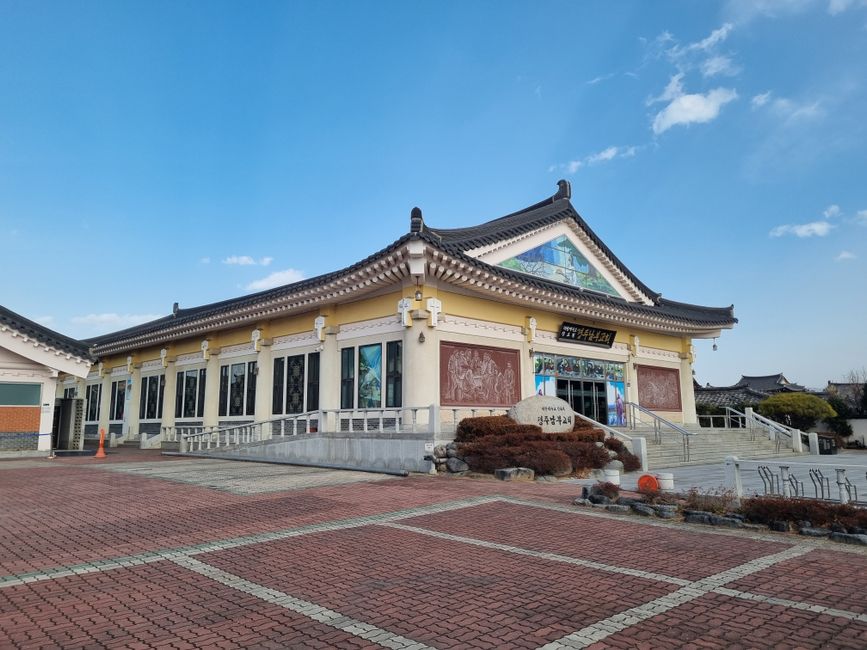

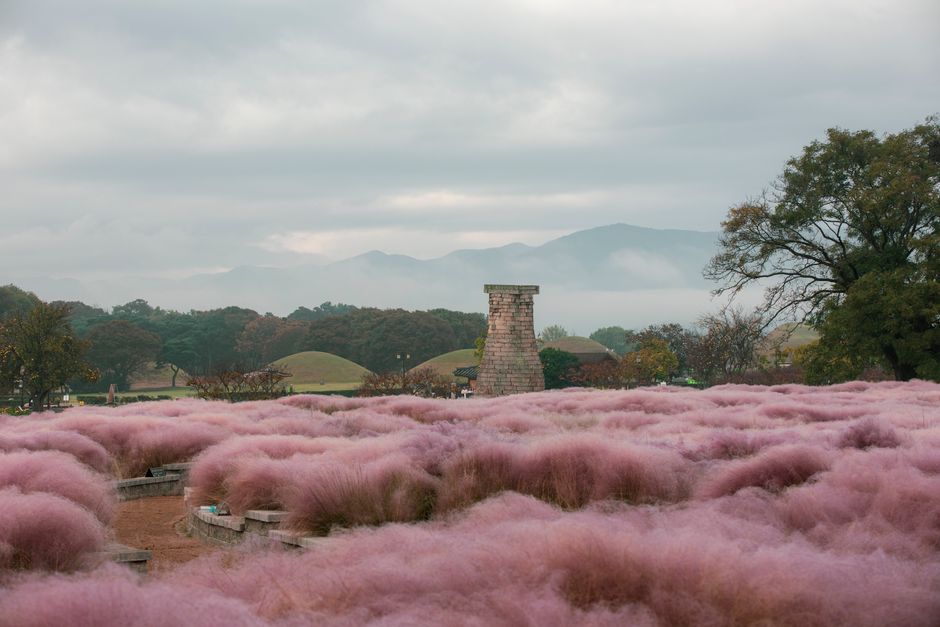
After contemplating my own inevitable, un-mounded demise, it was time for something a little more... spiritual. Or at least, something with more ornate woodworking. Enter Bulguksa Temple and Seokguram Grotto. These are the heavy hitters, the rock stars of Korean Buddhist art and architecture. Both are also UNESCO World Heritage sites, and for good reason.
Bulguksa, built in the 8th century during the peak of Silla's artistic endeavors, is just breathtaking. You ascend ancient stone staircases, cross ornate bridges (one for humans, one for the gods, apparently - no pressure!), and suddenly you're amidst a complex of vibrant buildings, golden Buddha statues, and the scent of incense. The attention to detail is insane, from the intricate paintings on the eaves to the perfectly balanced pagodas. I remember visiting on a particularly hot summer day, sweat trickling down my back, trying desperately to look contemplative and serene like the meditating monks, but mostly just worried about whether my ice cream would melt before I could eat it. Spoiler alert: it did. My inner peace was briefly interrupted by a sticky hand and a mild existential crisis over wasted dairy.
Getting to Seokguram Grotto is another adventure. It's nestled high on Mount Toham, about a 20-minute bus ride from Bulguksa, and requires a bit of a hike from the bus stop. The grotto itself houses a magnificent, serene Buddha statue, carved from granite and perfectly positioned to catch the sunrise (though visitors can't actually see the sunrise from inside). It's a masterpiece of Silla artistry and engineering, a triumph of human devotion and skill. When I finally reached it, puffing and panting, I looked at this perfectly sculpted Buddha and thought, "Wow, this guy definitely didn't have to climb a mountain in 30-degree Celsius weather." But all jokes aside, the serenity inside the grotto is palpable. It feels like a moment suspended in time, a quiet corner of the world where you can truly appreciate the dedication that went into creating something so profound. As of 2024, it remains a truly humbling experience, largely untouched by the passage of centuries.
Night Lights, Ancient Lakes, and a Slightly Questionable Dessert
Gyeongju isn't just about dusty tombs and tranquil temples, though. When the sun dips below those rolling green hills, the city transforms. My absolute favorite nighttime activity is visiting Donggung Palace and Wolji Pond. Now, here's a fun fact: it used to be called Anapji, but its original name, Wolji (meaning "moon pond"), was confirmed in 2007 through archaeological findings. So, if you hear someone call it Anapji, they're not wrong, just a little behind the times, like me trying to keep up with K-pop trends.
This former Silla palace site, built in 674 AD for royal banquets and as a secondary palace, is absolutely enchanting at night. The reconstructed pavilions glow with soft light, reflecting perfectly in the still waters of the pond. It's pure magic. Every angle is a postcard waiting to happen. I vividly recall one evening, years ago, trying to capture the perfect reflection photo. I was so engrossed, leaning precariously over the railing, that I nearly toppled into the pond, an event that would have undoubtedly gone viral on social media, titled "Tourist Attempts to Become Ancient Silla Fish Food." My wife still brings it up. "Remember when you almost became part of the exhibit?" she'll say, usually followed by a sigh that implies she's both amused and exhausted by my antics.
Afterward, we often wander through the Gyeongju Gyochon Traditional Village, an area with hanok (traditional Korean houses) and a glimpse into traditional Korean life. It's home to the Gyeongju Choi Clan House, a prominent family that adhered to principles of nobility and wealth management for centuries. You can try Gyeongju's famous "Hwangnam-ppang," a red bean paste pastry often stamped with a chrysanthemum pattern. It's delicious, trust me. But here's my moment of minor self-doubt: I once tried something from a street vendor late at night, a kind of gelatinous, sweet rice cake I couldn't quite identify. It looked suspiciously like something I'd seen in a science fiction movie that turns people into pod creatures. I ate it anyway. The things we do for adventure, right? (And it turns out it was just a particularly chewy kind of mochi, but for a solid five minutes, I was convinced I was about to sprout antennae.)
Anyway, Gyeongju is more than just a collection of historical sites; it's an experience. It's a place where history isn't confined to a dusty glass case but breathes and lives all around you. Whether you're marveling at the sheer ambition of Silla kings, finding unexpected peace in a centuries-old temple, or simply trying to get that perfect glowing reflection photo without face-planting into a pond, Gyeongju offers something genuinely unique. It's a hilarious, humbling, and utterly captivating journey back in time. Have you ever visited a place that just completely redefined your idea of "ancient history"? Because for me, Gyeongju did exactly that, and it did it with a mischievous twinkle in its eye, daring me not to fall in love. And I did. I really, really did.
But here's the thing about Korea: it has a way of surprising you. And Gyeongju? It doesn't just surprise you; it wallops you over the head with ancient charm, dusts you off, and then probably offers you a rice cake. This isn't your average historical theme park. This is a place where ancient royalty decided, "You know what? I'm going to be buried right here, under a giant, grassy molehill, and everyone's just going to have to deal with it." And deal with it, we do.
To truly understand Gyeongju, you have to embrace the fact that you are essentially walking through a living, breathing history book, albeit one where the pages are a bit crumbly and occasionally smell faintly of bibimbap. It was the capital of the Silla Kingdom for nearly a thousand years, from 57 BC to 935 AD. That's right, a *thousand* years. My longest commitment has been to a Netflix series, so a millennium of continuous rule is frankly mind-boggling. During its golden age, often cited as the 7th and 8th centuries, Gyeongju was a powerhouse, a city of immense wealth and culture, a hub that even impressed visitors from as far away as Persia. Today, it's a UNESCO World Heritage site, a title it absolutely deserves, even if it does mean I occasionally feel like I should be wearing tweed and carrying a magnifying glass.
Tumuli Trouble and the Royal Rumble
My first encounter with Gyeongju's unique architectural philosophy involved the Daereungwon Tomb Complex. I know, I know, "tomb complex" doesn't exactly scream "holiday fun," but trust me on this. Imagine a sprawling park, meticulously manicured, dotted with dozens of enormous, perfectly sculpted green mounds. These aren't just hills; these are the final resting places of Silla kings, queens, and nobles. They look like someone started playing golf with giant green pudding molds and just... left them there.
I remember my first visit, back in 2018. I'd arrived by train, a surprisingly efficient journey from Seoul, and immediately headed for the tombs. My plan was simple: walk around, maybe absorb some historical vibes, then find food. What I didn't anticipate was the sheer scale. These mounds are huge! Some are like small mountains. You can actually go inside Cheonmachong, the "Heavenly Horse Tomb," which was excavated in 1973. It's pretty cool, revealing the burial chamber and artifacts found within, including a saddle flap painted with a heavenly horse (hence the name, I'm not that clever). Walking through it, I kept thinking, "Man, this king must have had a serious fear of losing his stuff, because he took *everything* with him." Or maybe he just really, really liked bling. Seriously, the gold crowns and accessories found in these tombs are stunning. It's like an ancient Korean version of MTV Cribs, but for the afterlife.
One particular mound, Hwangnamdaechong, is actually a twin-mound tomb. It's so big it looks like two sleeping dragons spooning under a blanket of grass. And walking around these, I couldn't help but wonder if the Silla folks ever had neighborhood disputes. "Excuse me, King Jinheung, your tomb is casting a rather large shadow over my humble abode, and my kimchi isn't fermenting properly." I'm sure royal politics were a lot more complicated than that, but a man can dream of ancient HOA meetings. It's a surreal experience, wandering among these silent giants, knowing that beneath your feet lie centuries of power and mystery. It makes you feel incredibly small, which is either deeply humbling or a stark reminder that I probably haven't accomplished enough to warrant even a modest speed bump when I'm gone. Probably the latter.
Temples, Towers, and the Search for Inner Peace (or Just a Good Photo Op)
After contemplating my own inevitable, un-mounded demise, it was time for something a little more... spiritual. Or at least, something with more ornate woodworking. Enter Bulguksa Temple and Seokguram Grotto. These are the heavy hitters, the rock stars of Korean Buddhist art and architecture. Both are also UNESCO World Heritage sites, and for good reason.
Bulguksa, built in the 8th century during the peak of Silla's artistic endeavors, is just breathtaking. You ascend ancient stone staircases, cross ornate bridges (one for humans, one for the gods, apparently - no pressure!), and suddenly you're amidst a complex of vibrant buildings, golden Buddha statues, and the scent of incense. The attention to detail is insane, from the intricate paintings on the eaves to the perfectly balanced pagodas. I remember visiting on a particularly hot summer day, sweat trickling down my back, trying desperately to look contemplative and serene like the meditating monks, but mostly just worried about whether my ice cream would melt before I could eat it. Spoiler alert: it did. My inner peace was briefly interrupted by a sticky hand and a mild existential crisis over wasted dairy.
Getting to Seokguram Grotto is another adventure. It's nestled high on Mount Toham, about a 20-minute bus ride from Bulguksa, and requires a bit of a hike from the bus stop. The grotto itself houses a magnificent, serene Buddha statue, carved from granite and perfectly positioned to catch the sunrise (though visitors can't actually see the sunrise from inside). It's a masterpiece of Silla artistry and engineering, a triumph of human devotion and skill. When I finally reached it, puffing and panting, I looked at this perfectly sculpted Buddha and thought, "Wow, this guy definitely didn't have to climb a mountain in 30-degree Celsius weather." But all jokes aside, the serenity inside the grotto is palpable. It feels like a moment suspended in time, a quiet corner of the world where you can truly appreciate the dedication that went into creating something so profound. As of 2024, it remains a truly humbling experience, largely untouched by the passage of centuries.
Night Lights, Ancient Lakes, and a Slightly Questionable Dessert
Gyeongju isn't just about dusty tombs and tranquil temples, though. When the sun dips below those rolling green hills, the city transforms. My absolute favorite nighttime activity is visiting Donggung Palace and Wolji Pond. Now, here's a fun fact: it used to be called Anapji, but its original name, Wolji (meaning "moon pond"), was confirmed in 2007 through archaeological findings. So, if you hear someone call it Anapji, they're not wrong, just a little behind the times, like me trying to keep up with K-pop trends.
This former Silla palace site, built in 674 AD for royal banquets and as a secondary palace, is absolutely enchanting at night. The reconstructed pavilions glow with soft light, reflecting perfectly in the still waters of the pond. It's pure magic. Every angle is a postcard waiting to happen. I vividly recall one evening, years ago, trying to capture the perfect reflection photo. I was so engrossed, leaning precariously over the railing, that I nearly toppled into the pond, an event that would have undoubtedly gone viral on social media, titled "Tourist Attempts to Become Ancient Silla Fish Food." My wife still brings it up. "Remember when you almost became part of the exhibit?" she'll say, usually followed by a sigh that implies she's both amused and exhausted by my antics.
Afterward, we often wander through the Gyeongju Gyochon Traditional Village, an area with hanok (traditional Korean houses) and a glimpse into traditional Korean life. It's home to the Gyeongju Choi Clan House, a prominent family that adhered to principles of nobility and wealth management for centuries. You can try Gyeongju's famous "Hwangnam-ppang," a red bean paste pastry often stamped with a chrysanthemum pattern. It's delicious, trust me. But here's my moment of minor self-doubt: I once tried something from a street vendor late at night, a kind of gelatinous, sweet rice cake I couldn't quite identify. It looked suspiciously like something I'd seen in a science fiction movie that turns people into pod creatures. I ate it anyway. The things we do for adventure, right? (And it turns out it was just a particularly chewy kind of mochi, but for a solid five minutes, I was convinced I was about to sprout antennae.)
Anyway, Gyeongju is more than just a collection of historical sites; it's an experience. It's a place where history isn't confined to a dusty glass case but breathes and lives all around you. Whether you're marveling at the sheer ambition of Silla kings, finding unexpected peace in a centuries-old temple, or simply trying to get that perfect glowing reflection photo without face-planting into a pond, Gyeongju offers something genuinely unique. It's a hilarious, humbling, and utterly captivating journey back in time. Have you ever visited a place that just completely redefined your idea of "ancient history"? Because for me, Gyeongju did exactly that, and it did it with a mischievous twinkle in its eye, daring me not to fall in love. And I did. I really, really did.

Comments
Post a Comment