My Humbling Pilgrimage to PyeongChang: Where Mountains Laughed at My Urban Legs
I've always considered myself a relatively outdoorsy person. You know, the kind who enjoys a brisk walk to the coffee shop, or occasionally remembers to water their desk plant. But my friends, nothing, and I mean nothing, prepares you for the sheer, unadulterated, laugh-out-loud majesty (and subsequent personal humiliation) of PyeongChang. You think you've seen mountains? Bless your sweet, naïve heart. PyeongChang isn't just in the mountains; it is the mountains. It's the Korean Alps, and when I first arrived, I swear the peaks themselves were doing a slow clap, waiting to see just how quickly my city-softened physique would buckle. This isn't just about a pretty view; this is about a landscape that demands respect, and sometimes, a little comedic fumbling on your part.
My initial mental image of PyeongChang was, I admit, largely formed by shiny Olympic commercials featuring impossibly graceful athletes soaring through pristine snow. My reality, however, was less "graceful athlete" and more "overly enthusiastic toddler attempting to scale a sofa." I arrived, armed with a backpack full of snacks and an unwarranted sense of confidence, ready to commune with nature. What I found was a vast, sprawling canvas of peaks, valleys, and forests that stretched further than my Instagram panorama function could capture. This wasn't some manicured park; this was Mother Nature on a caffeine high, flexing her geographical biceps. From the majestic heights of Odaesan National Park to the winding rivers of Daegwallyeong, PyeongChang travel isn't just a destination; it's an immersive experience where the air tastes cleaner, the silence is louder, and your calves will develop opinions they never had before. It's a place that tells you, quite firmly, that your treadmill workout was cute, but utterly insufficient.
The Mountain's Call (And My Out-of-Shape Response)
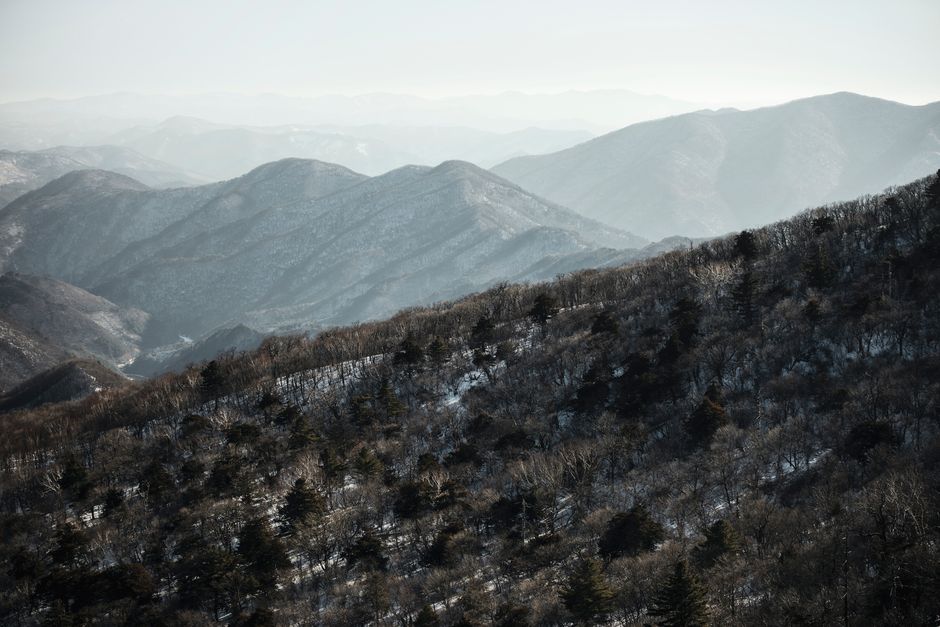
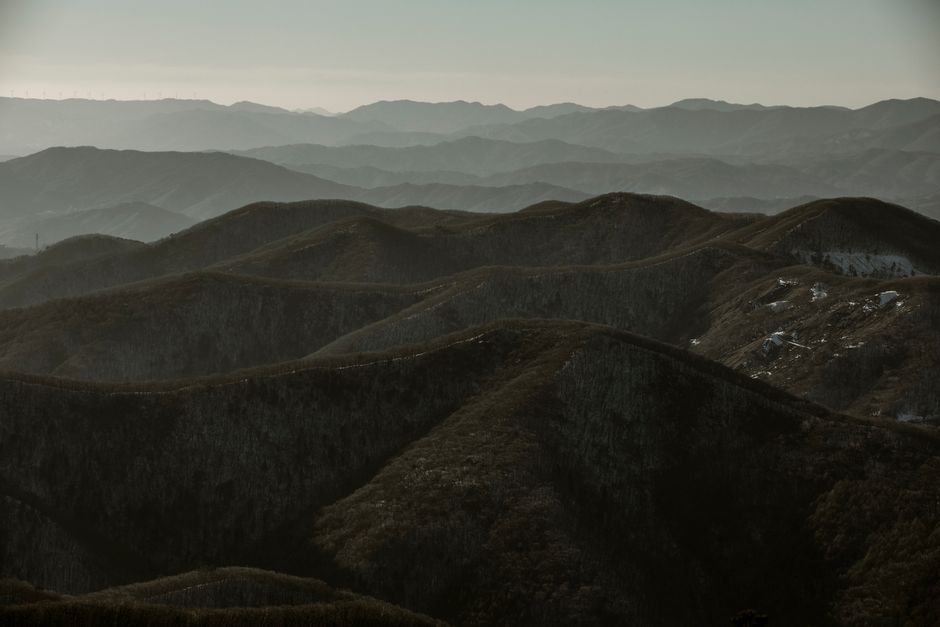
The first thing that hits you about PyeongChang, beyond the crisp air that actually feels like it's doing your lungs a favor, is the sheer, uncompromising scale of its topography. This isn't gentle rolling hills; these are proper, dramatic mountain ranges that seem to ripple into infinity. My internal monologue quickly went from "I'm going to conquer this!" to "Dear god, I hope there's a bus back down." I'd vaguely heard of the "Korean Alps," but I'd always imagined something quaint, perhaps a little postcard-ready. Instead, I found myself in a place where the mountains don't just stand; they loom. They dare you. They whisper, "Come hither, adventurer... and possibly regret it."
My first foray into "hiking in Korea" within PyeongChang involved a trail that, on the map, looked like a delightful squiggly line. In reality, it was less a squiggly line and more a vertical assault course disguised as a nature walk. My hiking boots, which had previously only seen action on urban sidewalks and the occasional muddy puddle, suddenly felt like lead weights. Every upward step was a testament to gravity's unwavering commitment, and my lungs, I swear, started questioning my life choices. I passed seasoned hikers, their faces stoic and determined, and I imagine I looked like a bewildered salmon trying to swim upstream without any fins. Yet, there's a perverse joy in that struggle. The panoramic view from even a modest peak, where the world unfurls beneath you like a crumpled masterpiece, makes every aching muscle feel like a badge of honor. You gasp, not just from exertion, but from the sheer, breathtaking beauty. It's a reminder that sometimes, the best views are earned, not simply observed from a tour bus. And if you're lucky, you might even spot some local wildlife – though I mostly just saw a very judgmental squirrel who clearly thought I was an amateur.
Adventures in Altitude: My Triumphs and Tribulations
PyeongChang isn't just a pretty face; it's an adventure playground designed by a deity with a penchant for dramatic elevation changes. Of course, the most famous of PyeongChang attractions revolve around its winter prowess. Yongpyong Resort and Alpensia are household names for a reason, drawing snow enthusiasts from across Asia. I, a self-proclaimed connoisseur of clumsy falls, decided it was my solemn duty to experience these slopes firsthand. The first time I strapped on skis, it was less a graceful glide and more a controlled (and sometimes uncontrolled) plummet. My instructor, a saintly individual who surely deserved hazard pay, watched with a mixture of concern and suppressed amusement as I attempted to master the subtle art of "not breaking a bone."

Skiing, I discovered, is a full-body workout that involves not only your legs but also your dignity. My particular style could best be described as "interpretive dance meets a runaway shopping cart." Yet, even amidst the spectacular tumbles and the occasional, surprisingly smooth, five-second glide, there was an undeniable thrill. The crisp air, the vast stretches of white, the collective joy of people embracing winter sports – it's infectious. And when you finally manage to link a few turns without ending up in a snowdrift, there's a moment of pure, unadulterated triumph that rivals winning the lottery (probably, I wouldn't know, I've never won the lottery).
But PyeongChang's outdoor activities aren't just for winter warriors. Come spring, summer, and fall, the landscape transforms. The ski slopes become verdant hiking trails, the valleys hum with life, and the rivers invite you for a bit of white-water rafting (which, for the record, I observed from a very safe distance, preferring my water in a bottle and my adrenaline from a steep hike). Odaesan National Park, a true gem among PyeongChang attractions, offers stunning autumn foliage that could make even the most jaded city slicker gasp. Imagine hillsides painted in fiery reds, brilliant oranges, and deep golds – it's like Mother Nature decided to throw a particularly extravagant paint party. The trails here range from gentle strolls perfect for families to challenging ascents for serious trekkers. And yes, my legs did scream for mercy on several occasions, but my eyes were too busy feasting on the incredible views to care. Every corner turned reveals another vista, another opportunity for a deep breath of mountain air, another chance to feel utterly insignificant and completely alive at the same time.
Beyond the Peaks: Uncovering PyeongChang's Deeper Charms
While the mountains are undoubtedly the star of the show, PyeongChang is more than just a collection of impressive peaks. Venture into the valleys and along the rivers, and you'll find a quieter, equally captivating side. Take Daegwallyeong, for instance. Known for its sheep farms, it offers a surprisingly pastoral counterpoint to the rugged mountain terrain. Walking among the fluffy, oblivious sheep with the mountains as a backdrop felt like stepping into a Miyazaki film, albeit one where the main character occasionally tripped over a rock. It's a delightful change of pace, a reminder that even in the heart of the Korean Alps, there's room for gentle, bucolic charm.
PyeongChang's history is also deeply intertwined with its geography. Ancient temples like Woljeongsa Temple, nestled deep within Odaesan National Park, have stood for centuries, their serene beauty a testament to human resilience and reverence for nature. Visiting these sites isn't just a cultural excursion; it's an immersive journey into a past where mountains were seen as sacred guardians. The old stone pagodas and wooden halls feel like they've grown organically from the earth itself, perfectly harmonizing with the surrounding forest. It's a humbling experience, walking through grounds where monks have mediated for generations, seeking peace amidst the very same towering trees and rushing streams that now greet modern visitors. These are the places where you can almost hear the echoes of history, a quiet counterpoint to the exhilarating rush of the ski slopes. It's a reminder that this region has been a place of profound significance long before it hosted the world's winter games.
My Grand Finale (or Graceful Retreat)
Leaving PyeongChang, I was a different person. Not in the "I've found myself!" spiritual awakening kind of way, but in the "My legs are stronger, my lungs are clearer, and I now possess a newfound respect for mountains" kind of way. PyeongChang, with its mighty mountain ranges, its exhilarating outdoor activities, and its pockets of serene history, isn't just a travel destination; it's a recalibration of your perspective. It reminds you that sometimes, the best way to feel alive is to be dwarfed by something infinitely larger than yourself.
It taught me that while my urban legs may not be built for scaling Everest, they can certainly tackle a decent incline, especially when rewarded with a view that makes your jaw drop faster than a poorly executed ski jump. PyeongChang is a place that challenges you, entertains you, and ultimately, humbles you. It's where the majestic meets the mirthful, and where even a slightly out-of-shape blogger can find adventure and a good laugh. So, if you're looking for a Korean escape that genuinely takes your breath away – sometimes literally, due to the altitude – pack your bags, lace up your (hopefully well-worn) boots, and prepare for a journey where nature is the undisputed headliner, and you're just along for the hilariously exhilarating ride. Just don't forget the blister plasters. Trust me on this one.
My initial mental image of PyeongChang was, I admit, largely formed by shiny Olympic commercials featuring impossibly graceful athletes soaring through pristine snow. My reality, however, was less "graceful athlete" and more "overly enthusiastic toddler attempting to scale a sofa." I arrived, armed with a backpack full of snacks and an unwarranted sense of confidence, ready to commune with nature. What I found was a vast, sprawling canvas of peaks, valleys, and forests that stretched further than my Instagram panorama function could capture. This wasn't some manicured park; this was Mother Nature on a caffeine high, flexing her geographical biceps. From the majestic heights of Odaesan National Park to the winding rivers of Daegwallyeong, PyeongChang travel isn't just a destination; it's an immersive experience where the air tastes cleaner, the silence is louder, and your calves will develop opinions they never had before. It's a place that tells you, quite firmly, that your treadmill workout was cute, but utterly insufficient.
The Mountain's Call (And My Out-of-Shape Response)
The first thing that hits you about PyeongChang, beyond the crisp air that actually feels like it's doing your lungs a favor, is the sheer, uncompromising scale of its topography. This isn't gentle rolling hills; these are proper, dramatic mountain ranges that seem to ripple into infinity. My internal monologue quickly went from "I'm going to conquer this!" to "Dear god, I hope there's a bus back down." I'd vaguely heard of the "Korean Alps," but I'd always imagined something quaint, perhaps a little postcard-ready. Instead, I found myself in a place where the mountains don't just stand; they loom. They dare you. They whisper, "Come hither, adventurer... and possibly regret it."
My first foray into "hiking in Korea" within PyeongChang involved a trail that, on the map, looked like a delightful squiggly line. In reality, it was less a squiggly line and more a vertical assault course disguised as a nature walk. My hiking boots, which had previously only seen action on urban sidewalks and the occasional muddy puddle, suddenly felt like lead weights. Every upward step was a testament to gravity's unwavering commitment, and my lungs, I swear, started questioning my life choices. I passed seasoned hikers, their faces stoic and determined, and I imagine I looked like a bewildered salmon trying to swim upstream without any fins. Yet, there's a perverse joy in that struggle. The panoramic view from even a modest peak, where the world unfurls beneath you like a crumpled masterpiece, makes every aching muscle feel like a badge of honor. You gasp, not just from exertion, but from the sheer, breathtaking beauty. It's a reminder that sometimes, the best views are earned, not simply observed from a tour bus. And if you're lucky, you might even spot some local wildlife – though I mostly just saw a very judgmental squirrel who clearly thought I was an amateur.
Adventures in Altitude: My Triumphs and Tribulations
PyeongChang isn't just a pretty face; it's an adventure playground designed by a deity with a penchant for dramatic elevation changes. Of course, the most famous of PyeongChang attractions revolve around its winter prowess. Yongpyong Resort and Alpensia are household names for a reason, drawing snow enthusiasts from across Asia. I, a self-proclaimed connoisseur of clumsy falls, decided it was my solemn duty to experience these slopes firsthand. The first time I strapped on skis, it was less a graceful glide and more a controlled (and sometimes uncontrolled) plummet. My instructor, a saintly individual who surely deserved hazard pay, watched with a mixture of concern and suppressed amusement as I attempted to master the subtle art of "not breaking a bone."
Skiing, I discovered, is a full-body workout that involves not only your legs but also your dignity. My particular style could best be described as "interpretive dance meets a runaway shopping cart." Yet, even amidst the spectacular tumbles and the occasional, surprisingly smooth, five-second glide, there was an undeniable thrill. The crisp air, the vast stretches of white, the collective joy of people embracing winter sports – it's infectious. And when you finally manage to link a few turns without ending up in a snowdrift, there's a moment of pure, unadulterated triumph that rivals winning the lottery (probably, I wouldn't know, I've never won the lottery).
But PyeongChang's outdoor activities aren't just for winter warriors. Come spring, summer, and fall, the landscape transforms. The ski slopes become verdant hiking trails, the valleys hum with life, and the rivers invite you for a bit of white-water rafting (which, for the record, I observed from a very safe distance, preferring my water in a bottle and my adrenaline from a steep hike). Odaesan National Park, a true gem among PyeongChang attractions, offers stunning autumn foliage that could make even the most jaded city slicker gasp. Imagine hillsides painted in fiery reds, brilliant oranges, and deep golds – it's like Mother Nature decided to throw a particularly extravagant paint party. The trails here range from gentle strolls perfect for families to challenging ascents for serious trekkers. And yes, my legs did scream for mercy on several occasions, but my eyes were too busy feasting on the incredible views to care. Every corner turned reveals another vista, another opportunity for a deep breath of mountain air, another chance to feel utterly insignificant and completely alive at the same time.
Beyond the Peaks: Uncovering PyeongChang's Deeper Charms
While the mountains are undoubtedly the star of the show, PyeongChang is more than just a collection of impressive peaks. Venture into the valleys and along the rivers, and you'll find a quieter, equally captivating side. Take Daegwallyeong, for instance. Known for its sheep farms, it offers a surprisingly pastoral counterpoint to the rugged mountain terrain. Walking among the fluffy, oblivious sheep with the mountains as a backdrop felt like stepping into a Miyazaki film, albeit one where the main character occasionally tripped over a rock. It's a delightful change of pace, a reminder that even in the heart of the Korean Alps, there's room for gentle, bucolic charm.
PyeongChang's history is also deeply intertwined with its geography. Ancient temples like Woljeongsa Temple, nestled deep within Odaesan National Park, have stood for centuries, their serene beauty a testament to human resilience and reverence for nature. Visiting these sites isn't just a cultural excursion; it's an immersive journey into a past where mountains were seen as sacred guardians. The old stone pagodas and wooden halls feel like they've grown organically from the earth itself, perfectly harmonizing with the surrounding forest. It's a humbling experience, walking through grounds where monks have mediated for generations, seeking peace amidst the very same towering trees and rushing streams that now greet modern visitors. These are the places where you can almost hear the echoes of history, a quiet counterpoint to the exhilarating rush of the ski slopes. It's a reminder that this region has been a place of profound significance long before it hosted the world's winter games.
My Grand Finale (or Graceful Retreat)
Leaving PyeongChang, I was a different person. Not in the "I've found myself!" spiritual awakening kind of way, but in the "My legs are stronger, my lungs are clearer, and I now possess a newfound respect for mountains" kind of way. PyeongChang, with its mighty mountain ranges, its exhilarating outdoor activities, and its pockets of serene history, isn't just a travel destination; it's a recalibration of your perspective. It reminds you that sometimes, the best way to feel alive is to be dwarfed by something infinitely larger than yourself.
It taught me that while my urban legs may not be built for scaling Everest, they can certainly tackle a decent incline, especially when rewarded with a view that makes your jaw drop faster than a poorly executed ski jump. PyeongChang is a place that challenges you, entertains you, and ultimately, humbles you. It's where the majestic meets the mirthful, and where even a slightly out-of-shape blogger can find adventure and a good laugh. So, if you're looking for a Korean escape that genuinely takes your breath away – sometimes literally, due to the altitude – pack your bags, lace up your (hopefully well-worn) boots, and prepare for a journey where nature is the undisputed headliner, and you're just along for the hilariously exhilarating ride. Just don't forget the blister plasters. Trust me on this one.


Comments
Post a Comment