My Map's Meltdown: Discovering Korea's Off-the-Beaten-Path Treasures (and Why My GPS Now Needs Therapy)
Alright, gather 'round, intrepid adventurers and those of you who just accidentally clicked this link while trying to find a recipe for kimchi jigae. We need to talk about Korea. Specifically, the Korea that exists beyond the neon glow of Seoul's Gangnam, the historical grandeur of Gyeongbokgung, or even the bustling beaches of Busan. I'm talking about the Korea that makes your GPS throw up its digital hands in despair, the one where the only traffic jam involves a very determined cow, and where the most intense K-drama is trying to explain to a kindly grandmother that, no, you don't actually want *more* rice.
For too long, I, like many, was a creature of comfort. Give me a subway line, a decent coffee shop, and a Wi-Fi signal strong enough to stream my favorite mukbang, and I was happy. But then, a whisper began to echo in the cavernous, slightly echoey chamber that is my travel-addicted brain: "What else is out there?" This whisper soon grew into a full-blown shout, accompanied by dramatic orchestral music and a montage of me staring wistfully at maps. I realized I'd been treating Korea like a popular buffet – loading up on the familiar favorites and entirely missing the artisanal kimchi tucked away in a quiet corner. So, I packed my bags, downloaded about seventeen offline translation apps (most of which proved as useful as a chocolate teapot in a downpour), and set off to find Korea's hidden gems, the kind of off-the-beaten-path destinations that promise authentic Korean travel experiences and probably a few bewildered stares from the locals. My mission: to boldly go where fewer tourists have gone before, and preferably, return with all my limbs and a compelling story. Spoiler alert: I mostly succeeded on all fronts, though my dignity occasionally took a vacation of its own.
Beyond the Bright Lights: Why I Traded K-Pop for Kimchi Fields (and Almost Got Eaten by a Goat)
My initial foray into the Korean countryside felt a bit like trying to solve a Rubik's Cube blindfolded, while simultaneously attempting to win a competitive eating contest. The public transportation, a marvel of efficiency in the cities, became a charmingly bewildering puzzle box outside them. Buses materialized out of thin air, drivers communicated through a series of knowing glances and rapid-fire Korean I had no hope of deciphering, and my fellow passengers were mostly delightful elderly ladies who seemed to take great joy in patting my head and offering me snacks. It was an exercise in letting go, a masterclass in surrendering to the delightful chaos of travel.
My primary target? The sprawling, fertile embrace of Jeollanam-do, or South Jeolla Province. This region is often overshadowed by its more boisterous neighbor, Jeonju (which, let's be fair, has a culinary scene that could make a stoic monk weep with joy). But Jeollanam-do? It's the quiet, sophisticated cousin who doesn't need to shout to be heard. It's where the pace of life slows down to a gentle amble, where rice paddies stretch out like emerald carpets to the horizon, and the air smells like damp earth and possibility. It's where you truly find rural Korea, a side that offers a stark, beautiful contrast to the urban hum.
My first major discovery was the area around Haenam, a place so far south it literally means "sea south." I mean, it's practically dipping its toes in the ocean. The journey there was epic, a testament to my iron will (and the bus driver's bladder control). I half-expected to see a sign reading "HERE BE DRAGONS" as we pulled into the sleepy bus terminal. Haenam is home to Mihwangsa Temple, nestled on Dalmasan Mountain, a place so serene that my usual internal monologue of existential dread and grocery lists was replaced by a gentle hum of tranquility. I swear, the mountain air cleansed my very soul, and probably my pores too. The drive up involved switchbacks that made me question the structural integrity of both the bus and my internal organs, but the views of the sea and the surrounding islands were a worthy reward. This wasn't just a temple; it was a sanctuary, a quiet whispered prayer carried on the wind.
The Green Heart of Jeolla: Where My GPS Had an Existential Crisis (and I Found Enlightenment)
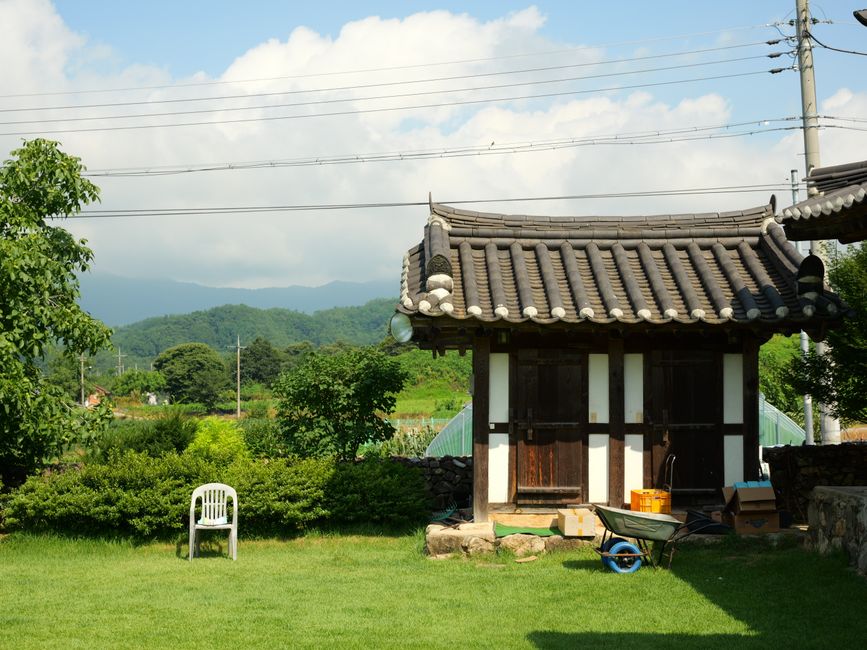
Venturing deeper into Jeollanam-do felt like stepping into a travel brochure for "authentic Korean travel experiences" that nobody ever bothered to print. The roads became narrower, the villages quaint, and the stares I received from the locals shifted from "Oh, a foreigner!" to "Wait, *another* foreigner? Are you lost, dear?" (I probably was.) My GPS, usually my stalwart companion, started emitting confused beeps, as if it was encountering geographical features it hadn't downloaded in its last update.

One unforgettable stop was Gangjin. If Haenam was the stoic guardian of the coast, Gangjin was its artistic, ceramic-obsessed neighbor. This town is renowned for its Goryeo celadon pottery, a historical craft of such delicate beauty that it makes my attempts at pottery in high school look like I was trying to mold mud with my feet (which, to be fair, I might have been). I visited the Celadon Museum, which, while informative, mostly made me feel utterly inadequate as a creator. My hands, more accustomed to typing frantically, felt like clumsy paws in comparison to the artisans who crafted these masterpieces centuries ago. But the real magic happened *outside* the museum, wandering through the quiet streets, stumbling upon small, family-run workshops, and watching a potter's wheel spin with a hypnotic rhythm. It was a reminder that genuine craftsmanship still thrives, even in our fast-paced, digital world. It felt like uncovering a true undiscovered Korea, a place where history wasn't just in books but in the very earth underfoot.
And the food? Oh, the food. If Seoul is the glittering, Michelin-starred restaurant, Jeollanam-do is the grandmother's kitchen you always wished you had. Every meal was a feast, a symphony of banchan (side dishes) that defied gravity and plate space. Seafood so fresh it practically swam onto my plate, pungent fermented delicacies that challenged my palate (and sometimes won), and an abundance of greens I couldn't name but devoured with gusto. My personal favorite was a hearty bowl of *nakji yeonpotang* (octopus soup) that warmed me from the tips of my toes to the roots of my hair, making me temporarily forget about the aforementioned goat incident (don't ask, it involved a surprisingly territorial kid and my attempts to take a scenic photo). This was the local Korean experience I craved, unfiltered and utterly delicious.
Island Escapes and Salty Air: My Battle with a Ferry (and My Sense of Direction)
My quest for unique Korea destinations eventually led me to a rather vibrant, almost whimsical concept: the Purple Island, or Banwol Island, part of Sinan-gun. Now, Sinan-gun is an archipelago off the coast of Jeollanam-do known for its salt farms and beautiful, often empty, beaches. The Purple Island, however, is on another level. Someone, presumably with a deep love for the color violet and a healthy dose of audacity, decided to paint *everything* purple. Houses, bridges, telephone booths – even the roads. It's a commitment to a theme that I, a notorious interior design commitment-phobe, could only admire.
Getting there involved a bus, a brief existential crisis at a ferry terminal (my ticket was a scrap of paper, the ferry looked suspiciously small, and the ocean looked suspiciously vast), and then a drive across a series of purple bridges connecting a couple of smaller islands. The journey itself was part of the adventure, offering stunning views of the Korean coastline, dotted with countless tiny islands that looked like forgotten jewels scattered across the sea. I was convinced I was heading to a parallel dimension where Prince ruled the interior decorating scene.
And it was spectacular. Walking through the village, everything bathed in shades of lavender, plum, and amethyst, felt like stepping into a Dr. Seuss book redesigned by a particularly chic alien. The locals, many of whom seemed to have embraced the purple theme in their clothing as well, were incredibly welcoming, though I suspect they're used to tourists gawking at their brightly colored homes. I even spotted a purple car. A *purple car*. This place was the epitome of an unexpected, slightly bizarre, and utterly charming hidden gem Korea could offer. It wasn't about ancient history or breathtaking natural grandeur, but about pure, unadulterated whimsy and a surprisingly strong local community spirit. It felt like discovering a secret garden, except instead of flowers, it was an entire island dedicated to one glorious color.
My map, having long given up any pretense of accuracy, was now just a crumpled piece of paper in my pocket, occasionally used to fan myself. But I didn't need it. I was somewhere truly unique, somewhere that redefined my idea of what Korean travel could be.
So, if you're looking to peel back the layers of South Korea and discover its less-trodden paths, I implore you: leave the well-worn tourist routes behind. Venture beyond the familiar. Take that long bus ride. Risk a ferry. Embrace the occasional communication mishap and the inevitable, delightful confusion. You might find yourself marveling at ancient pottery, getting serenaded by the sea breeze on a vividly colored island, or simply enjoying the quiet beauty of rural Korea. You'll not only discover incredible undiscovered Korea destinations, but you'll also discover a bit more about yourself, like how surprisingly resilient your stomach is on a bumpy bus, or how genuinely joyful it can be to get completely, utterly lost. Just make sure to pack snacks, because those remote bus stops aren't always equipped with a 7-Eleven. And maybe learn how to say "I'm lost, but happy" in Korean. It'll come in handy.
For too long, I, like many, was a creature of comfort. Give me a subway line, a decent coffee shop, and a Wi-Fi signal strong enough to stream my favorite mukbang, and I was happy. But then, a whisper began to echo in the cavernous, slightly echoey chamber that is my travel-addicted brain: "What else is out there?" This whisper soon grew into a full-blown shout, accompanied by dramatic orchestral music and a montage of me staring wistfully at maps. I realized I'd been treating Korea like a popular buffet – loading up on the familiar favorites and entirely missing the artisanal kimchi tucked away in a quiet corner. So, I packed my bags, downloaded about seventeen offline translation apps (most of which proved as useful as a chocolate teapot in a downpour), and set off to find Korea's hidden gems, the kind of off-the-beaten-path destinations that promise authentic Korean travel experiences and probably a few bewildered stares from the locals. My mission: to boldly go where fewer tourists have gone before, and preferably, return with all my limbs and a compelling story. Spoiler alert: I mostly succeeded on all fronts, though my dignity occasionally took a vacation of its own.
Beyond the Bright Lights: Why I Traded K-Pop for Kimchi Fields (and Almost Got Eaten by a Goat)
My initial foray into the Korean countryside felt a bit like trying to solve a Rubik's Cube blindfolded, while simultaneously attempting to win a competitive eating contest. The public transportation, a marvel of efficiency in the cities, became a charmingly bewildering puzzle box outside them. Buses materialized out of thin air, drivers communicated through a series of knowing glances and rapid-fire Korean I had no hope of deciphering, and my fellow passengers were mostly delightful elderly ladies who seemed to take great joy in patting my head and offering me snacks. It was an exercise in letting go, a masterclass in surrendering to the delightful chaos of travel.
My primary target? The sprawling, fertile embrace of Jeollanam-do, or South Jeolla Province. This region is often overshadowed by its more boisterous neighbor, Jeonju (which, let's be fair, has a culinary scene that could make a stoic monk weep with joy). But Jeollanam-do? It's the quiet, sophisticated cousin who doesn't need to shout to be heard. It's where the pace of life slows down to a gentle amble, where rice paddies stretch out like emerald carpets to the horizon, and the air smells like damp earth and possibility. It's where you truly find rural Korea, a side that offers a stark, beautiful contrast to the urban hum.
My first major discovery was the area around Haenam, a place so far south it literally means "sea south." I mean, it's practically dipping its toes in the ocean. The journey there was epic, a testament to my iron will (and the bus driver's bladder control). I half-expected to see a sign reading "HERE BE DRAGONS" as we pulled into the sleepy bus terminal. Haenam is home to Mihwangsa Temple, nestled on Dalmasan Mountain, a place so serene that my usual internal monologue of existential dread and grocery lists was replaced by a gentle hum of tranquility. I swear, the mountain air cleansed my very soul, and probably my pores too. The drive up involved switchbacks that made me question the structural integrity of both the bus and my internal organs, but the views of the sea and the surrounding islands were a worthy reward. This wasn't just a temple; it was a sanctuary, a quiet whispered prayer carried on the wind.
The Green Heart of Jeolla: Where My GPS Had an Existential Crisis (and I Found Enlightenment)
Venturing deeper into Jeollanam-do felt like stepping into a travel brochure for "authentic Korean travel experiences" that nobody ever bothered to print. The roads became narrower, the villages quaint, and the stares I received from the locals shifted from "Oh, a foreigner!" to "Wait, *another* foreigner? Are you lost, dear?" (I probably was.) My GPS, usually my stalwart companion, started emitting confused beeps, as if it was encountering geographical features it hadn't downloaded in its last update.
One unforgettable stop was Gangjin. If Haenam was the stoic guardian of the coast, Gangjin was its artistic, ceramic-obsessed neighbor. This town is renowned for its Goryeo celadon pottery, a historical craft of such delicate beauty that it makes my attempts at pottery in high school look like I was trying to mold mud with my feet (which, to be fair, I might have been). I visited the Celadon Museum, which, while informative, mostly made me feel utterly inadequate as a creator. My hands, more accustomed to typing frantically, felt like clumsy paws in comparison to the artisans who crafted these masterpieces centuries ago. But the real magic happened *outside* the museum, wandering through the quiet streets, stumbling upon small, family-run workshops, and watching a potter's wheel spin with a hypnotic rhythm. It was a reminder that genuine craftsmanship still thrives, even in our fast-paced, digital world. It felt like uncovering a true undiscovered Korea, a place where history wasn't just in books but in the very earth underfoot.
And the food? Oh, the food. If Seoul is the glittering, Michelin-starred restaurant, Jeollanam-do is the grandmother's kitchen you always wished you had. Every meal was a feast, a symphony of banchan (side dishes) that defied gravity and plate space. Seafood so fresh it practically swam onto my plate, pungent fermented delicacies that challenged my palate (and sometimes won), and an abundance of greens I couldn't name but devoured with gusto. My personal favorite was a hearty bowl of *nakji yeonpotang* (octopus soup) that warmed me from the tips of my toes to the roots of my hair, making me temporarily forget about the aforementioned goat incident (don't ask, it involved a surprisingly territorial kid and my attempts to take a scenic photo). This was the local Korean experience I craved, unfiltered and utterly delicious.
Island Escapes and Salty Air: My Battle with a Ferry (and My Sense of Direction)
My quest for unique Korea destinations eventually led me to a rather vibrant, almost whimsical concept: the Purple Island, or Banwol Island, part of Sinan-gun. Now, Sinan-gun is an archipelago off the coast of Jeollanam-do known for its salt farms and beautiful, often empty, beaches. The Purple Island, however, is on another level. Someone, presumably with a deep love for the color violet and a healthy dose of audacity, decided to paint *everything* purple. Houses, bridges, telephone booths – even the roads. It's a commitment to a theme that I, a notorious interior design commitment-phobe, could only admire.
Getting there involved a bus, a brief existential crisis at a ferry terminal (my ticket was a scrap of paper, the ferry looked suspiciously small, and the ocean looked suspiciously vast), and then a drive across a series of purple bridges connecting a couple of smaller islands. The journey itself was part of the adventure, offering stunning views of the Korean coastline, dotted with countless tiny islands that looked like forgotten jewels scattered across the sea. I was convinced I was heading to a parallel dimension where Prince ruled the interior decorating scene.
And it was spectacular. Walking through the village, everything bathed in shades of lavender, plum, and amethyst, felt like stepping into a Dr. Seuss book redesigned by a particularly chic alien. The locals, many of whom seemed to have embraced the purple theme in their clothing as well, were incredibly welcoming, though I suspect they're used to tourists gawking at their brightly colored homes. I even spotted a purple car. A *purple car*. This place was the epitome of an unexpected, slightly bizarre, and utterly charming hidden gem Korea could offer. It wasn't about ancient history or breathtaking natural grandeur, but about pure, unadulterated whimsy and a surprisingly strong local community spirit. It felt like discovering a secret garden, except instead of flowers, it was an entire island dedicated to one glorious color.
My map, having long given up any pretense of accuracy, was now just a crumpled piece of paper in my pocket, occasionally used to fan myself. But I didn't need it. I was somewhere truly unique, somewhere that redefined my idea of what Korean travel could be.
So, if you're looking to peel back the layers of South Korea and discover its less-trodden paths, I implore you: leave the well-worn tourist routes behind. Venture beyond the familiar. Take that long bus ride. Risk a ferry. Embrace the occasional communication mishap and the inevitable, delightful confusion. You might find yourself marveling at ancient pottery, getting serenaded by the sea breeze on a vividly colored island, or simply enjoying the quiet beauty of rural Korea. You'll not only discover incredible undiscovered Korea destinations, but you'll also discover a bit more about yourself, like how surprisingly resilient your stomach is on a bumpy bus, or how genuinely joyful it can be to get completely, utterly lost. Just make sure to pack snacks, because those remote bus stops aren't always equipped with a 7-Eleven. And maybe learn how to say "I'm lost, but happy" in Korean. It'll come in handy.


Comments
Post a Comment