My Stomach's Olympic Journey: Conquering PyeongChang's Culinary Peaks (and Plateaus)
Confession time: I'm a glutton. Not in the biblical 'seven deadly sins' kind of way, more in the 'my travel itinerary often revolves around my next meal' kind of way. So, when I decided to embark on a journey to PyeongChang, a place famous for its pristine nature and, oh right, hosting a little thing called the Winter Olympics, my first thought wasn't 'How many majestic peaks can I hike?' It was, 'How many Hanwoo steaks can I ethically consume before my wallet cries uncle?'
PyeongChang, nestled in the heart of Gangwon-do, isn't just about snow-capped mountains and tranquil valleys. It's a culinary powerhouse, a place where the local produce sings and the livestock practically moonwalks its way to deliciousness. While Seoul boasts its trendy cafes and Michelin-starred marvels, PyeongChang offers something more grounded, more... honest. It's the kind of place where you don't just eat food; you experience it, often with a side of existential contemplation about how something so simple can taste so profoundly good. This isn't just food tourism; it's a pilgrimage for the palate, and I was its eager, if slightly clumsy, disciple.
The Sacred Cow: My Holy Grail Quest for PyeongChang Hanwoo
Ah, Hanwoo. The Rolls-Royce of Korean beef. The Beyoncé of bovine. You can't mention PyeongChang food without genuflecting at the altar of its locally raised Hanwoo beef. Before my trip, I'd seen the Instagram posts, read the rave reviews, and even dreamt of perfectly marbled cuts sizzling on a charcoal grill. My expectations, to put it mildly, were stratospheric. My budget, however, was more 'economy class with a carry-on that barely fits.' This, my friends, set the stage for a dramatic quest for the ultimate PyeongChang Hanwoo experience.
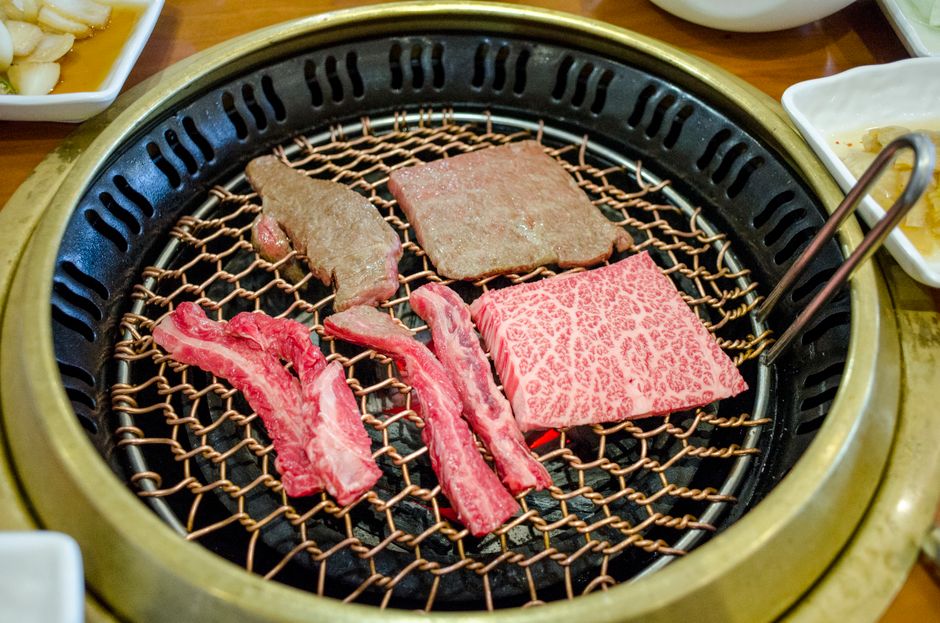
My first Hanwoo encounter was less a majestic feast and more a nervous negotiation with a menu that felt like it was written in ancient runes and priced in gold doubloons. I finally pointed to a cut that looked both impressive and wouldn't require me to sell a kidney. The server, bless their patient soul, seemed to intuit my blend of awe and apprehension, silently guiding me through the sacred ritual of grilling. I'm usually the guy who burns toast, so operating tongs over prime beef felt like being entrusted with the nuclear launch codes. Every flip, every snip of the kitchen shears, was performed with the precision of a brain surgeon and the trembling hands of someone defusing a bomb. The stakes were high – my wallet, my taste buds, and my self-respect as a budding PyeongChang culinary explorer were all on the line.
And the verdict? Oh, sweet heavens. It was like a flavor explosion choreographed by angels. The tenderness, the subtle sweetness, the way it practically dissolved on my tongue – it wasn't just beef; it was an experience. It was the kind of meal that makes you momentarily forget all your life's problems, like that looming credit card bill or the fact you still haven't filed your taxes. It was a testament to why PyeongChang Hanwoo beef has earned its legendary status as a top Korean cuisine. I might have needed to skip a few meals afterwards to recover financially, but my soul, dear readers, was nourished.
But here's the kicker: not all Hanwoo experiences are created equal, and not all wallets are bottomless pits. I learned quickly that while premium cuts are divine, even the more 'modest' offerings from a reputable PyeongChang Hanwoo restaurant can provide an utterly fantastic meal. It's about the quality of the beef itself, raised in the pristine conditions of Gangwon-do, rather than just the price tag. The rich flavor and tender texture are a result of the careful farming practices prevalent in the region. My advice? Don't be afraid to ask for recommendations, or better yet, just point and pray. Your taste buds will thank you, and your bank account might forgive you eventually as you savor these local delicacies.
Beyond the Beef: A Carb Lover's Ode to PyeongChang's Humble Sideshow
Now, let's be real. As glorious as Hanwoo is, a person cannot live on expensive beef alone – unless they're independently wealthy or a professional food critic with an unlimited expense account, neither of which describes me. My stomach, a pragmatic beast, also craves carbs, vegetables, and anything else that forms a delicious, non-mortgage-inducing meal. And PyeongChang, bless its heart, delivers in spades with its diverse range of local specialties.


Enter makguksu, buckwheat noodles. If Hanwoo is the grand opera of PyeongChang cuisine, then makguksu is its delightfully quirky indie film. These cold, chewy noodles, often served with a tangy, spicy broth and a medley of fresh vegetables, are an absolute revelation. My first bowl was a bit of a sensory overload – the cool noodles, the spicy kick, the nutty flavor of the buckwheat – it was like a party in my mouth, and everyone was invited, including a slightly bewildered me. I confess, I may have slurped a little too enthusiastically, prompting a polite glance from a nearby grandmother who had clearly mastered the art of elegant noodle consumption. My personal best for a makguksu eating session currently stands at an embarrassing three bowls in two days. Don't judge. It was for research purposes into the sheer deliciousness of Gangwon-do specialties.
And let's not forget the humble potato. PyeongChang, with its fertile soil and cool climate, is prime potato country. You'll find them in everything from jeon (savory pancakes) to ongsimi (potato dumpling soup). My personal favorite was gamja-ongsimi, a soup so hearty and comforting, it felt like a warm hug from a particularly benevolent grandmother. It was simple, unpretentious, and utterly delicious. I remember one chilly evening, after a day of accidentally walking up what I thought was a gentle slope but turned out to be a minor mountain, a steaming bowl of ongsimi was quite literally a lifesaver. My body, exhausted and slightly damp from an unexpected drizzle, practically hummed with gratitude. It was a culinary reminder that sometimes, the simplest things are the most profoundly satisfying PyeongChang food experiences.
Then there are the banchan, the glorious parade of side dishes that accompany every Korean meal. In PyeongChang, these aren't just an afterthought; they're an integral part of the culinary experience. From various kinds of kimchi (cabbage, radish, cucumber – oh my!) to stir-fried greens, seasoned mushrooms, and obscure roots I couldn't identify but happily devoured, the banchan spread was a vibrant tapestry of flavors and textures. I often found myself asking for refills of my favorite banchan, only to be met with a silent, approving nod from the restaurant staff – a gesture that, in my mind, translated to 'Ah, another convert to the church of excellent side dishes.' This aspect of Korean cuisine is always a delightful surprise for those who travel to PyeongChang for the first time.
The Culinary Compass: Navigating PyeongChang's Flavors Without Getting Eaten Alive
So, you're convinced PyeongChang is a food paradise, but how does one, a mere mortal armed with a tourist map and a potentially dodgy sense of direction, navigate this gastronomic landscape of PyeongChang restaurants? Fear not, fellow food adventurers, for I have stumbled, quite literally, so you don't have to.
First off, don't be afraid to venture beyond the obvious tourist traps. While there are plenty of excellent restaurants catering to visitors, some of the most memorable meals I had were in smaller, unassuming eateries tucked away on side streets. These are the places where the owners often double as chefs, the menus might be entirely in Korean (hello, Google Translate and universal pointing gestures!), and the food tastes like it was cooked with generations of culinary wisdom. I once walked into a place purely because it smelled amazing – a strategy I highly recommend, provided you're not walking past a dumpster. It turned out to be a small eatery specializing in bibimbap, and it was glorious. The warmth of the rice, the crunch of the vegetables, the perfectly cooked egg on top – it was a simple masterpiece, and a testament to the fact that sometimes, the best discoveries are made by following your nose, especially when exploring Korean cuisine.
Exploring a local PyeongChang market is also a must. While not strictly a dining experience, the markets are where you can see the raw ingredients that make PyeongChang's cuisine so special. The vibrant colors of fresh produce, the stacks of dried fish, the tantalizing aroma of street food wafting through the air – it's a feast for the senses. I bought some incredibly sweet corn from a vendor who communicated entirely through smiles and gestures, and it was one of the freshest, most delicious ears of corn I've ever had. It was a tiny moment, but it perfectly encapsulated the genuine warmth and quality that permeates the PyeongChang food scene and makes food tourism here so rewarding.
One practical tip I learned the hard way: if you're sensitive to spice, always, always ask. Korean food can pack a punch, and while I consider myself a spice enthusiast, there were a few moments where my mouth felt like it was auditioning for a dragon role. A simple 'mae-ap-ji an-ge hae ju-se-yo' (please make it not spicy) can save you from a fiery, yet delicious, predicament. Or, just embrace the burn, like I eventually did, and chase it with generous sips of water and occasional gasps for air. It adds character to the story, right?
So, if you're planning a trip to PyeongChang, don't just pack your hiking boots and ski gear. Pack your appetite. Prepare for a culinary adventure that will challenge your taste buds, expand your palate, and quite possibly make you question every life choice that didn't involve moving to Gangwon-do to become a professional Hanwoo taster. My stomach might have endured an Olympic-level workout, navigating spicy broths, mountainous plates of banchan, and the sheer joy of perfectly grilled beef, but it was a journey I'd undertake again in a heartbeat. Because in PyeongChang, every meal isn't just sustenance; it's a story, a memory, and occasionally, a genuinely hilarious struggle for utensil mastery. Go forth and eat, my friends. And maybe bring some antacids. Just in case.
PyeongChang, nestled in the heart of Gangwon-do, isn't just about snow-capped mountains and tranquil valleys. It's a culinary powerhouse, a place where the local produce sings and the livestock practically moonwalks its way to deliciousness. While Seoul boasts its trendy cafes and Michelin-starred marvels, PyeongChang offers something more grounded, more... honest. It's the kind of place where you don't just eat food; you experience it, often with a side of existential contemplation about how something so simple can taste so profoundly good. This isn't just food tourism; it's a pilgrimage for the palate, and I was its eager, if slightly clumsy, disciple.
The Sacred Cow: My Holy Grail Quest for PyeongChang Hanwoo
Ah, Hanwoo. The Rolls-Royce of Korean beef. The Beyoncé of bovine. You can't mention PyeongChang food without genuflecting at the altar of its locally raised Hanwoo beef. Before my trip, I'd seen the Instagram posts, read the rave reviews, and even dreamt of perfectly marbled cuts sizzling on a charcoal grill. My expectations, to put it mildly, were stratospheric. My budget, however, was more 'economy class with a carry-on that barely fits.' This, my friends, set the stage for a dramatic quest for the ultimate PyeongChang Hanwoo experience.
My first Hanwoo encounter was less a majestic feast and more a nervous negotiation with a menu that felt like it was written in ancient runes and priced in gold doubloons. I finally pointed to a cut that looked both impressive and wouldn't require me to sell a kidney. The server, bless their patient soul, seemed to intuit my blend of awe and apprehension, silently guiding me through the sacred ritual of grilling. I'm usually the guy who burns toast, so operating tongs over prime beef felt like being entrusted with the nuclear launch codes. Every flip, every snip of the kitchen shears, was performed with the precision of a brain surgeon and the trembling hands of someone defusing a bomb. The stakes were high – my wallet, my taste buds, and my self-respect as a budding PyeongChang culinary explorer were all on the line.
And the verdict? Oh, sweet heavens. It was like a flavor explosion choreographed by angels. The tenderness, the subtle sweetness, the way it practically dissolved on my tongue – it wasn't just beef; it was an experience. It was the kind of meal that makes you momentarily forget all your life's problems, like that looming credit card bill or the fact you still haven't filed your taxes. It was a testament to why PyeongChang Hanwoo beef has earned its legendary status as a top Korean cuisine. I might have needed to skip a few meals afterwards to recover financially, but my soul, dear readers, was nourished.
But here's the kicker: not all Hanwoo experiences are created equal, and not all wallets are bottomless pits. I learned quickly that while premium cuts are divine, even the more 'modest' offerings from a reputable PyeongChang Hanwoo restaurant can provide an utterly fantastic meal. It's about the quality of the beef itself, raised in the pristine conditions of Gangwon-do, rather than just the price tag. The rich flavor and tender texture are a result of the careful farming practices prevalent in the region. My advice? Don't be afraid to ask for recommendations, or better yet, just point and pray. Your taste buds will thank you, and your bank account might forgive you eventually as you savor these local delicacies.
Beyond the Beef: A Carb Lover's Ode to PyeongChang's Humble Sideshow
Now, let's be real. As glorious as Hanwoo is, a person cannot live on expensive beef alone – unless they're independently wealthy or a professional food critic with an unlimited expense account, neither of which describes me. My stomach, a pragmatic beast, also craves carbs, vegetables, and anything else that forms a delicious, non-mortgage-inducing meal. And PyeongChang, bless its heart, delivers in spades with its diverse range of local specialties.
Enter makguksu, buckwheat noodles. If Hanwoo is the grand opera of PyeongChang cuisine, then makguksu is its delightfully quirky indie film. These cold, chewy noodles, often served with a tangy, spicy broth and a medley of fresh vegetables, are an absolute revelation. My first bowl was a bit of a sensory overload – the cool noodles, the spicy kick, the nutty flavor of the buckwheat – it was like a party in my mouth, and everyone was invited, including a slightly bewildered me. I confess, I may have slurped a little too enthusiastically, prompting a polite glance from a nearby grandmother who had clearly mastered the art of elegant noodle consumption. My personal best for a makguksu eating session currently stands at an embarrassing three bowls in two days. Don't judge. It was for research purposes into the sheer deliciousness of Gangwon-do specialties.
And let's not forget the humble potato. PyeongChang, with its fertile soil and cool climate, is prime potato country. You'll find them in everything from jeon (savory pancakes) to ongsimi (potato dumpling soup). My personal favorite was gamja-ongsimi, a soup so hearty and comforting, it felt like a warm hug from a particularly benevolent grandmother. It was simple, unpretentious, and utterly delicious. I remember one chilly evening, after a day of accidentally walking up what I thought was a gentle slope but turned out to be a minor mountain, a steaming bowl of ongsimi was quite literally a lifesaver. My body, exhausted and slightly damp from an unexpected drizzle, practically hummed with gratitude. It was a culinary reminder that sometimes, the simplest things are the most profoundly satisfying PyeongChang food experiences.
Then there are the banchan, the glorious parade of side dishes that accompany every Korean meal. In PyeongChang, these aren't just an afterthought; they're an integral part of the culinary experience. From various kinds of kimchi (cabbage, radish, cucumber – oh my!) to stir-fried greens, seasoned mushrooms, and obscure roots I couldn't identify but happily devoured, the banchan spread was a vibrant tapestry of flavors and textures. I often found myself asking for refills of my favorite banchan, only to be met with a silent, approving nod from the restaurant staff – a gesture that, in my mind, translated to 'Ah, another convert to the church of excellent side dishes.' This aspect of Korean cuisine is always a delightful surprise for those who travel to PyeongChang for the first time.
The Culinary Compass: Navigating PyeongChang's Flavors Without Getting Eaten Alive
So, you're convinced PyeongChang is a food paradise, but how does one, a mere mortal armed with a tourist map and a potentially dodgy sense of direction, navigate this gastronomic landscape of PyeongChang restaurants? Fear not, fellow food adventurers, for I have stumbled, quite literally, so you don't have to.
First off, don't be afraid to venture beyond the obvious tourist traps. While there are plenty of excellent restaurants catering to visitors, some of the most memorable meals I had were in smaller, unassuming eateries tucked away on side streets. These are the places where the owners often double as chefs, the menus might be entirely in Korean (hello, Google Translate and universal pointing gestures!), and the food tastes like it was cooked with generations of culinary wisdom. I once walked into a place purely because it smelled amazing – a strategy I highly recommend, provided you're not walking past a dumpster. It turned out to be a small eatery specializing in bibimbap, and it was glorious. The warmth of the rice, the crunch of the vegetables, the perfectly cooked egg on top – it was a simple masterpiece, and a testament to the fact that sometimes, the best discoveries are made by following your nose, especially when exploring Korean cuisine.
Exploring a local PyeongChang market is also a must. While not strictly a dining experience, the markets are where you can see the raw ingredients that make PyeongChang's cuisine so special. The vibrant colors of fresh produce, the stacks of dried fish, the tantalizing aroma of street food wafting through the air – it's a feast for the senses. I bought some incredibly sweet corn from a vendor who communicated entirely through smiles and gestures, and it was one of the freshest, most delicious ears of corn I've ever had. It was a tiny moment, but it perfectly encapsulated the genuine warmth and quality that permeates the PyeongChang food scene and makes food tourism here so rewarding.
One practical tip I learned the hard way: if you're sensitive to spice, always, always ask. Korean food can pack a punch, and while I consider myself a spice enthusiast, there were a few moments where my mouth felt like it was auditioning for a dragon role. A simple 'mae-ap-ji an-ge hae ju-se-yo' (please make it not spicy) can save you from a fiery, yet delicious, predicament. Or, just embrace the burn, like I eventually did, and chase it with generous sips of water and occasional gasps for air. It adds character to the story, right?
So, if you're planning a trip to PyeongChang, don't just pack your hiking boots and ski gear. Pack your appetite. Prepare for a culinary adventure that will challenge your taste buds, expand your palate, and quite possibly make you question every life choice that didn't involve moving to Gangwon-do to become a professional Hanwoo taster. My stomach might have endured an Olympic-level workout, navigating spicy broths, mountainous plates of banchan, and the sheer joy of perfectly grilled beef, but it was a journey I'd undertake again in a heartbeat. Because in PyeongChang, every meal isn't just sustenance; it's a story, a memory, and occasionally, a genuinely hilarious struggle for utensil mastery. Go forth and eat, my friends. And maybe bring some antacids. Just in case.


Comments
Post a Comment