My Wild Goose Chase (and Actual Geese) Through Jeongseon's Untouched Winter Wonderland
Alright, buckle up, buttercups, because if you thought Part 1 of this series (which, let's be honest, probably involved me vaguely gesturing at a map of Korea while covered in energy drink stains) was an adventure, you haven't seen anything yet. We're going deeper. We're going off-piste. We're venturing to Jeongseon, a place where the air smells crisper, the mountains loom larger, and my chances of getting utterly bewildered by a local dish dramatically increase.
Here's the thing: everyone talks about PyeongChang. And for good reason, it had the Olympics, the whole shebang. But PyeongChang is like the popular kid in high school - everyone knows them, they're perfectly polished. Jeongseon? Jeongseon is the quiet, mysterious kid in the back row with an unexpectedly cool band and a secretly epic life story. This is where you go when you've mastered the groomed slopes (or, in my case, consistently avoided face-planting on them) and you crave something... wilder. Something that makes you feel like an actual explorer, not just a tourist with a fancy ski pass. As of 2024, Jeongseon is still very much that untapped gem for the truly adventurous soul.
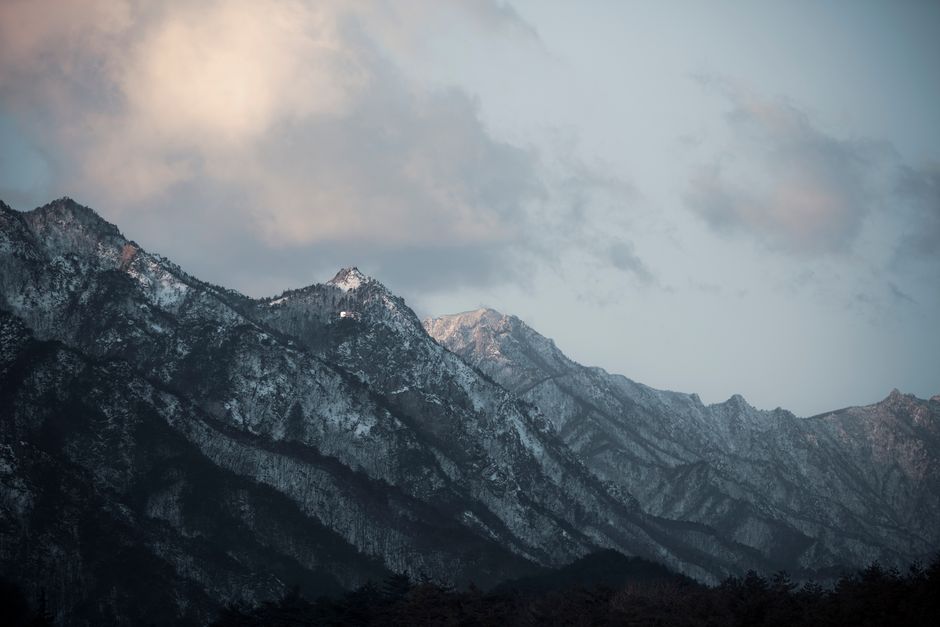
The journey itself is part of the charm, or part of the self-flagellation, depending on my mood and caffeine intake. Getting to Jeongseon from Seoul involves a train or bus ride that steadily peels back layers of urban sprawl until you're surrounded by what can only be described as a topographical masterpiece. Think towering peaks, deep valleys, and rivers that twist like a pretzel that's had a particularly stressful day. I remember one particularly foggy morning, back in, oh, let's say late 2022, when I was on a bus heading towards Jeongseon. The mist was so thick, it felt like the bus was just floating through a cloud of existential dread. We rounded a corner, and suddenly, the fog lifted just enough to reveal a jagged peak, completely dusted in fresh snow, piercing the sky like a giant, angry sugar cone. My jaw hit the floor. Or, you know, the bus seat in front of me. It was genuinely breathtaking. And for a moment, I forgot about my questionable life choices and the fact that I'd probably packed too many emergency snacks.
Beyond the Groomed - Taming Jeongseon's Backcountry Beast
Now, for the main event: Jeongseon's untouched backcountry. This isn't your grandma's bunny slope, unless your grandma was a highly decorated extreme athlete who regularly wrestled bears for fun. We're talking about proper, exhilarating, sometimes-terrifying backcountry skiing and snowboarding. The region is dominated by the majestic Gariwangsan Mountain, which, believe it or not, hosted the alpine skiing events during the 2018 PyeongChang Winter Olympics. Yes, PyeongChang used Jeongseon's glorious mountains. It's like the popular kid borrowing the cool kid's car for prom. As of 2024, sections of Gariwangsan are still undergoing ecological restoration after the Olympic events, but other areas and nearby peaks offer truly unparalleled backcountry experiences for those with the right gear, skills, and, crucially, a local guide who knows their way around. Seriously, do NOT attempt this without a guide unless you have a death wish and a particularly robust life insurance policy.
I know, I know, "backcountry" sounds like a euphemism for "getting lost and eaten by something." But honestly, with a good guide, it's an absolute dream. Imagine floating through powder so light and deep it feels like you're surfing on clouds, with only the whisper of the wind and the crunch of your skis for company. None of that lift-line chatter, none of that dodging selfie sticks. Just pure, unadulterated winter bliss. My first foray into Jeongseon backcountry, in early 2023, was with a grizzled local named Mr. Kim, who looked like he'd been carved out of the mountain himself. He pointed out different snow formations, taught me how to read the terrain for potential hazards, and patiently waited while I untangled myself from a particularly aggressive patch of tree branches. He even packed us some traditional Korean snacks - yakgwa and some dried persimmon - which tasted like pure gold after hours of exertion. I probably burned off 500 calories and immediately replaced them with 700, but hey, balance! It's an unforgettable experience, pushing your limits in a way that groomed runs simply can't. The sheer scale of the mountains, especially Gariwangsan, truly dwarfs you. It's humbling, in a good, slightly terrifying way.
For those less inclined to strap planks to their feet and hurl themselves down a mountain (I get it, it sounds aggressive when you put it like that), Jeongseon also offers fantastic winter hiking and snowshoeing opportunities. The paths might be less defined than your usual national park trails, but the rewards are tenfold. Imagine pristine forest paths, often untouched by other human footsteps, leading to breathtaking viewpoints where the entire landscape is painted in shades of white and steely blue. It's perfect for finding that inner calm, or just, you know, getting enough oxygen to think straight after all that kimchi.
Jeongseon's Cultural Heartbeat: More Than Just Snow
But Jeongseon isn't just a pretty face with killer slopes. It has a soul, and that soul sings. Literally. This region is the home of Jeongseon Arirang, one of Korea's most famous traditional folk songs, recognized by UNESCO as intangible cultural heritage. This isn't just some old tune; it's a living, breathing tradition that tells stories of resilience, love, and the beauty of this mountainous land. As of 2024, you can still experience live performances in various venues around town, often at the Jeongseon Arirang Center or even informal gatherings at local markets. It's soulful, it's haunting, and it will give you goosebumps, even if you don't understand a single word. It's like listening to a particularly moving blues song, but with a distinct Korean flavor and a melody that just lodges itself in your brain in the best possible way.
Speaking of local markets, the Jeongseon Five-Day Market (Jeongseon 5-day Jang) is an absolute must-visit. This isn't some sanitised tourist trap; this is the real deal. It operates on dates ending in 2 and 7 (e.g., 2nd, 7th, 12th, 17th, 22nd, 27th of the month) and has been doing so for decades. You'll find everything from wild foraged herbs and local medicinal ingredients (some of which look suspiciously like things you'd see in a goblin's pantry) to steaming bowls of kalguksu (handmade noodle soup) and spicy buckwheat crepes (memiljeon). The aromas alone are enough to make you forget you ever had a diet. My favorite memory from the market, from a visit in late 2023, was trying to haggle for some dried shiitake mushrooms with an elderly woman who spoke about as much English as I do advanced quantum physics. We communicated entirely through gestures, smiles, and her unwavering insistence that her mushrooms were the best in all of Korea. And you know what? They probably were. I bought two bags.
Just a short trip from the market, you'll find Auraji Lake, a place steeped in folklore and natural beauty. It's where the Pyeongchang River and the Songcheon Stream meet, creating a tranquil confluence that, especially in winter, looks like a postcard from a forgotten era. The name "Auraji" itself comes from the Korean word "aura" (to meet) and "ji" (a place), so it literally means "the meeting place." It's a perfect spot for a contemplative stroll, letting the crisp air clear your head and the stunning scenery remind you that some things are just perfect as they are. You might even spot some actual geese. Unlike my metaphorical wild goose chase, these are the real, honking kind.
A Culinary Adventure (with Minimal Public Embarrassment)
No trip to Jeongseon is complete without diving headfirst into its distinctive cuisine. Thanks to its mountainous terrain and pristine rivers, Jeongseon specializes in wild edibles and freshwater delicacies. Think "gondre namulbap" (rice mixed with seasoned thistle greens), "chueotang" (spicy loach soup), and "ongsim-i" (potato dumpling soup). The loach soup might sound intimidating, but it's incredibly hearty and flavourful, perfect for warming you up after a day in the snow.
One evening, in late 2023, I mustered all my courage and ordered chueotang. The waitress, bless her soul, must have seen the hesitation in my eyes, because she gave me a look that perfectly blended pity and amusement. "You try," she said, with a reassuring nod. And I did. It was surprisingly delicious, earthy and robust, nothing like the mental image of a muddy fish I'd conjured. It's a dish that tastes of the region, of tradition, and of the sheer, unyielding resilience of people who have lived off this land for centuries. It's also the kind of dish that makes you feel like you've earned your bragging rights. Just remember to slurp quietly. Or don't. I'm not your mom.
So, if you're looking to truly escape the ordinary, to trade the ski resort hustle for genuine wilderness and rich cultural tapestry, Jeongseon is calling. It's a place that asks you to slow down, to engage, and perhaps, to try a bowl of loach soup. It's a place where the winter isn't just about sports; it's about discovery.
Anyway, that's all for Jeongseon. But don't go packing away your winter gear just yet, because next time, we're heading to another corner of Korea's stunning winter landscape, where the snow is deep, the history is ancient, and the chances of me doing something spectacularly clumsy are still delightfully high. Think frozen lakes, perhaps some ice fishing, and definitely more traditional food that will challenge my culinary comfort zone. Stay tuned!
Here's the thing: everyone talks about PyeongChang. And for good reason, it had the Olympics, the whole shebang. But PyeongChang is like the popular kid in high school - everyone knows them, they're perfectly polished. Jeongseon? Jeongseon is the quiet, mysterious kid in the back row with an unexpectedly cool band and a secretly epic life story. This is where you go when you've mastered the groomed slopes (or, in my case, consistently avoided face-planting on them) and you crave something... wilder. Something that makes you feel like an actual explorer, not just a tourist with a fancy ski pass. As of 2024, Jeongseon is still very much that untapped gem for the truly adventurous soul.
The journey itself is part of the charm, or part of the self-flagellation, depending on my mood and caffeine intake. Getting to Jeongseon from Seoul involves a train or bus ride that steadily peels back layers of urban sprawl until you're surrounded by what can only be described as a topographical masterpiece. Think towering peaks, deep valleys, and rivers that twist like a pretzel that's had a particularly stressful day. I remember one particularly foggy morning, back in, oh, let's say late 2022, when I was on a bus heading towards Jeongseon. The mist was so thick, it felt like the bus was just floating through a cloud of existential dread. We rounded a corner, and suddenly, the fog lifted just enough to reveal a jagged peak, completely dusted in fresh snow, piercing the sky like a giant, angry sugar cone. My jaw hit the floor. Or, you know, the bus seat in front of me. It was genuinely breathtaking. And for a moment, I forgot about my questionable life choices and the fact that I'd probably packed too many emergency snacks.
Beyond the Groomed - Taming Jeongseon's Backcountry Beast
Now, for the main event: Jeongseon's untouched backcountry. This isn't your grandma's bunny slope, unless your grandma was a highly decorated extreme athlete who regularly wrestled bears for fun. We're talking about proper, exhilarating, sometimes-terrifying backcountry skiing and snowboarding. The region is dominated by the majestic Gariwangsan Mountain, which, believe it or not, hosted the alpine skiing events during the 2018 PyeongChang Winter Olympics. Yes, PyeongChang used Jeongseon's glorious mountains. It's like the popular kid borrowing the cool kid's car for prom. As of 2024, sections of Gariwangsan are still undergoing ecological restoration after the Olympic events, but other areas and nearby peaks offer truly unparalleled backcountry experiences for those with the right gear, skills, and, crucially, a local guide who knows their way around. Seriously, do NOT attempt this without a guide unless you have a death wish and a particularly robust life insurance policy.
I know, I know, "backcountry" sounds like a euphemism for "getting lost and eaten by something." But honestly, with a good guide, it's an absolute dream. Imagine floating through powder so light and deep it feels like you're surfing on clouds, with only the whisper of the wind and the crunch of your skis for company. None of that lift-line chatter, none of that dodging selfie sticks. Just pure, unadulterated winter bliss. My first foray into Jeongseon backcountry, in early 2023, was with a grizzled local named Mr. Kim, who looked like he'd been carved out of the mountain himself. He pointed out different snow formations, taught me how to read the terrain for potential hazards, and patiently waited while I untangled myself from a particularly aggressive patch of tree branches. He even packed us some traditional Korean snacks - yakgwa and some dried persimmon - which tasted like pure gold after hours of exertion. I probably burned off 500 calories and immediately replaced them with 700, but hey, balance! It's an unforgettable experience, pushing your limits in a way that groomed runs simply can't. The sheer scale of the mountains, especially Gariwangsan, truly dwarfs you. It's humbling, in a good, slightly terrifying way.
For those less inclined to strap planks to their feet and hurl themselves down a mountain (I get it, it sounds aggressive when you put it like that), Jeongseon also offers fantastic winter hiking and snowshoeing opportunities. The paths might be less defined than your usual national park trails, but the rewards are tenfold. Imagine pristine forest paths, often untouched by other human footsteps, leading to breathtaking viewpoints where the entire landscape is painted in shades of white and steely blue. It's perfect for finding that inner calm, or just, you know, getting enough oxygen to think straight after all that kimchi.
Jeongseon's Cultural Heartbeat: More Than Just Snow
But Jeongseon isn't just a pretty face with killer slopes. It has a soul, and that soul sings. Literally. This region is the home of Jeongseon Arirang, one of Korea's most famous traditional folk songs, recognized by UNESCO as intangible cultural heritage. This isn't just some old tune; it's a living, breathing tradition that tells stories of resilience, love, and the beauty of this mountainous land. As of 2024, you can still experience live performances in various venues around town, often at the Jeongseon Arirang Center or even informal gatherings at local markets. It's soulful, it's haunting, and it will give you goosebumps, even if you don't understand a single word. It's like listening to a particularly moving blues song, but with a distinct Korean flavor and a melody that just lodges itself in your brain in the best possible way.
Speaking of local markets, the Jeongseon Five-Day Market (Jeongseon 5-day Jang) is an absolute must-visit. This isn't some sanitised tourist trap; this is the real deal. It operates on dates ending in 2 and 7 (e.g., 2nd, 7th, 12th, 17th, 22nd, 27th of the month) and has been doing so for decades. You'll find everything from wild foraged herbs and local medicinal ingredients (some of which look suspiciously like things you'd see in a goblin's pantry) to steaming bowls of kalguksu (handmade noodle soup) and spicy buckwheat crepes (memiljeon). The aromas alone are enough to make you forget you ever had a diet. My favorite memory from the market, from a visit in late 2023, was trying to haggle for some dried shiitake mushrooms with an elderly woman who spoke about as much English as I do advanced quantum physics. We communicated entirely through gestures, smiles, and her unwavering insistence that her mushrooms were the best in all of Korea. And you know what? They probably were. I bought two bags.
Just a short trip from the market, you'll find Auraji Lake, a place steeped in folklore and natural beauty. It's where the Pyeongchang River and the Songcheon Stream meet, creating a tranquil confluence that, especially in winter, looks like a postcard from a forgotten era. The name "Auraji" itself comes from the Korean word "aura" (to meet) and "ji" (a place), so it literally means "the meeting place." It's a perfect spot for a contemplative stroll, letting the crisp air clear your head and the stunning scenery remind you that some things are just perfect as they are. You might even spot some actual geese. Unlike my metaphorical wild goose chase, these are the real, honking kind.
A Culinary Adventure (with Minimal Public Embarrassment)
No trip to Jeongseon is complete without diving headfirst into its distinctive cuisine. Thanks to its mountainous terrain and pristine rivers, Jeongseon specializes in wild edibles and freshwater delicacies. Think "gondre namulbap" (rice mixed with seasoned thistle greens), "chueotang" (spicy loach soup), and "ongsim-i" (potato dumpling soup). The loach soup might sound intimidating, but it's incredibly hearty and flavourful, perfect for warming you up after a day in the snow.
One evening, in late 2023, I mustered all my courage and ordered chueotang. The waitress, bless her soul, must have seen the hesitation in my eyes, because she gave me a look that perfectly blended pity and amusement. "You try," she said, with a reassuring nod. And I did. It was surprisingly delicious, earthy and robust, nothing like the mental image of a muddy fish I'd conjured. It's a dish that tastes of the region, of tradition, and of the sheer, unyielding resilience of people who have lived off this land for centuries. It's also the kind of dish that makes you feel like you've earned your bragging rights. Just remember to slurp quietly. Or don't. I'm not your mom.
So, if you're looking to truly escape the ordinary, to trade the ski resort hustle for genuine wilderness and rich cultural tapestry, Jeongseon is calling. It's a place that asks you to slow down, to engage, and perhaps, to try a bowl of loach soup. It's a place where the winter isn't just about sports; it's about discovery.
Anyway, that's all for Jeongseon. But don't go packing away your winter gear just yet, because next time, we're heading to another corner of Korea's stunning winter landscape, where the snow is deep, the history is ancient, and the chances of me doing something spectacularly clumsy are still delightfully high. Think frozen lakes, perhaps some ice fishing, and definitely more traditional food that will challenge my culinary comfort zone. Stay tuned!


Comments
Post a Comment